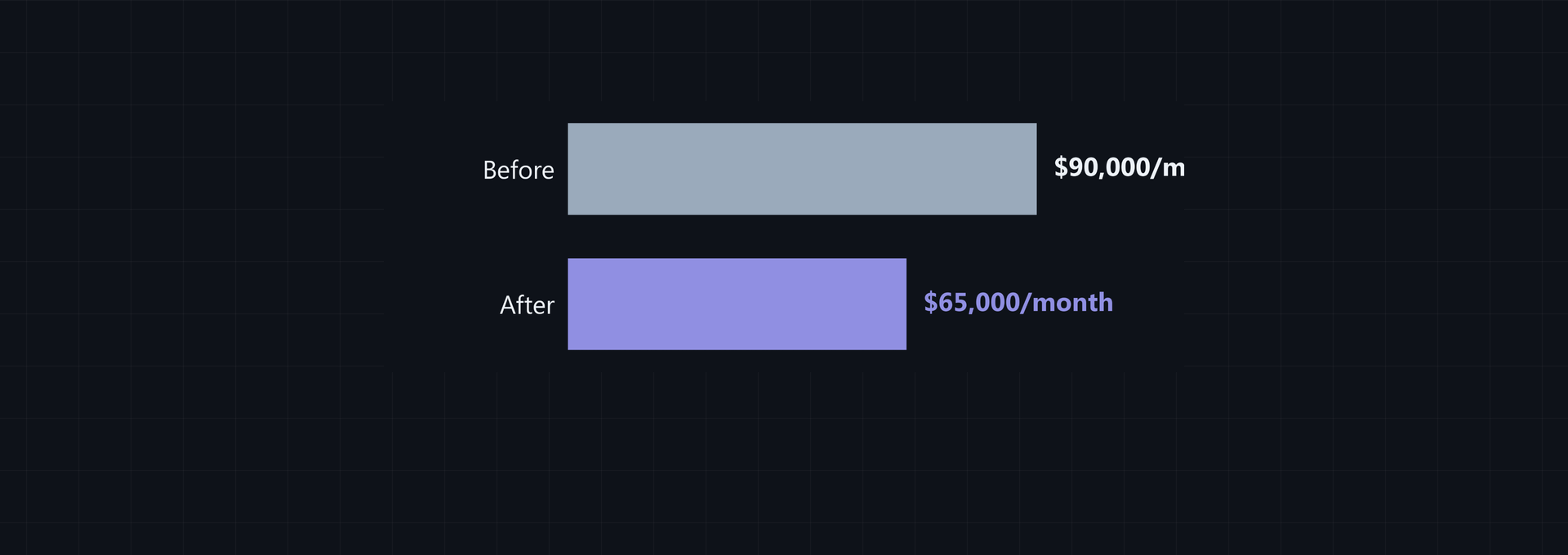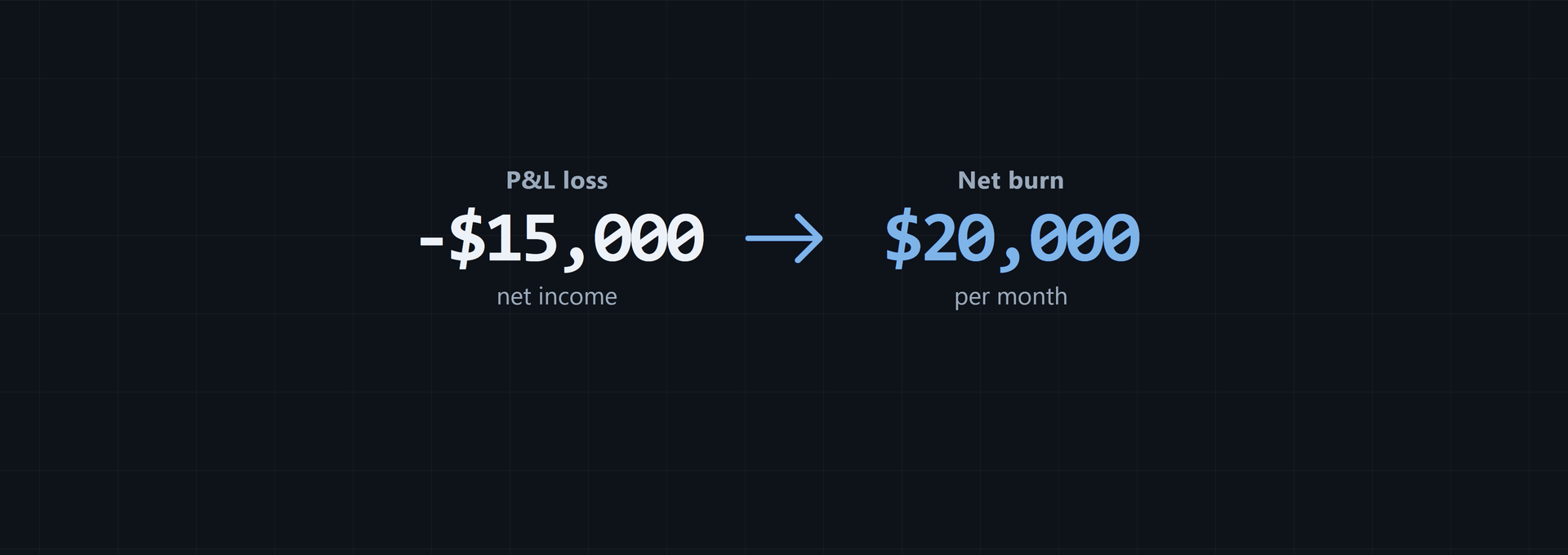
For a startup, burn rate fundraising timing starts with a planning target, not a universal month count. Keep enough cash to reach the next measurable milestone, allow time for a realistic fundraising process, and hold a stated buffer. After the raise, compare that target with actual burn, revenue, milestone progress, and the time needed for the next financing or a path to profitability.
What runway target should you set after a raise?
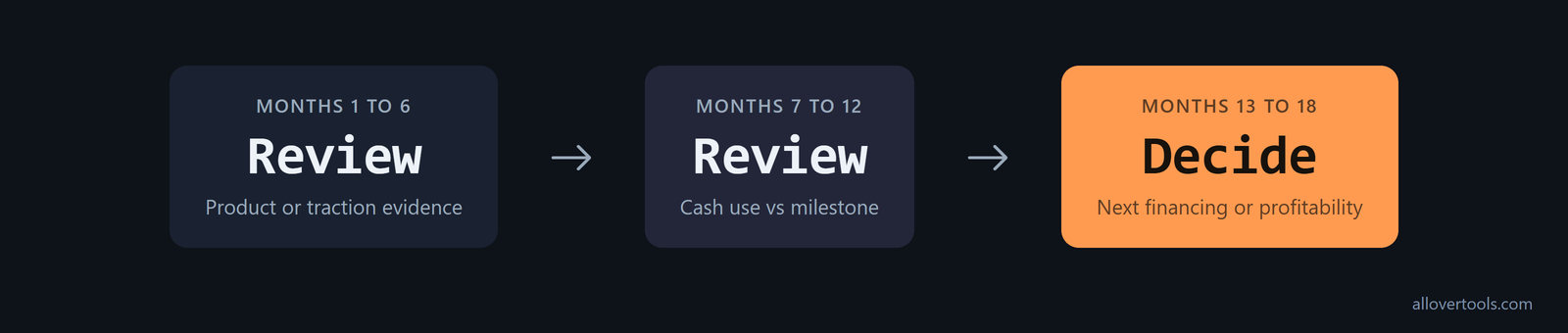
An 18-month path is useful here as a worked example, not a rule. Review it at months 1 to 6, 7 to 12, and 13 to 18. At each checkpoint, ask whether the cash still covers the next milestone and whether the assumptions behind spending and revenue still hold.
Set the target from the next milestone
Start with four inputs. Give each one an owner and a review trigger.
- Milestone: state the measurable result the cash should reach.
- Monthly cash need: use the spending and revenue assumptions that determine cash depletion.
- Fundraising lead time: allow for outreach, diligence, and a close.
- Buffer: reserve time for a delayed milestone, slower revenue, or a longer process.
At months 1 to 6, check whether spending is producing the planned product or traction evidence. At months 7 to 12, compare actual cash use with the path to the milestone. At months 13 to 18, decide whether the next financing or a path to profitability still follows from the evidence. A months of runway target is useful only while these checks still support it.
Match the explanation to funding stage
Runway expectations by series are qualitative, not fixed month rules. At pre-seed, explain cash discipline, product assumptions, and product progress. At seed, tie hiring and market work to measurable traction. Later-stage investors will want a clear link between spending, repeatable growth, and a credible next financing or profitability path.
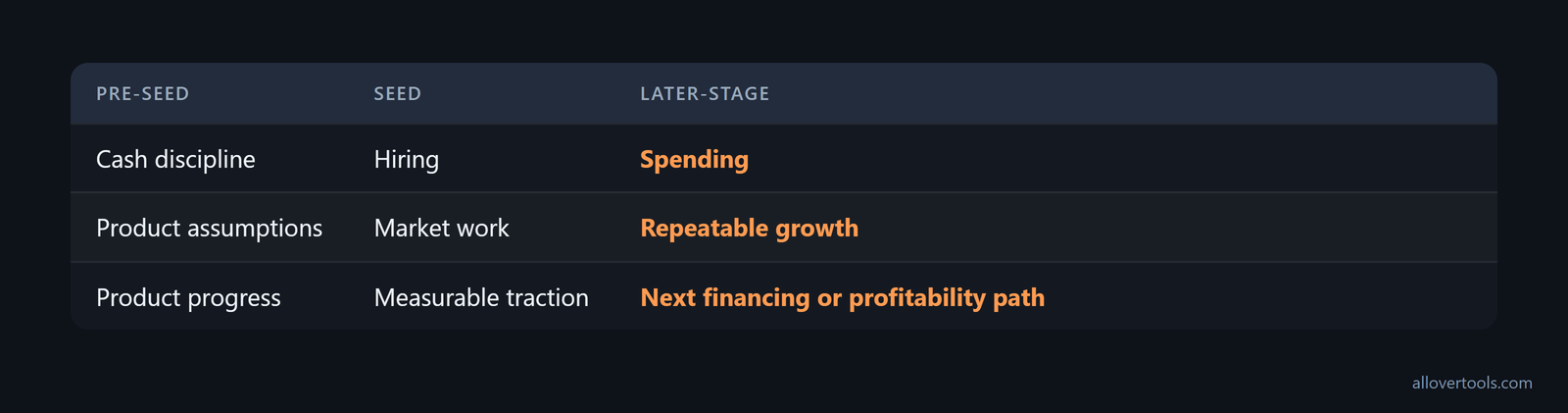
The same runway number can be weak when the milestone and spending path are unclear. A board or investor needs to see what the cash buys, what evidence will change the plan, and when the next review happens.
Investors do not use one runway threshold, so the target should fit the company's stage and evidence. In a 2024 survey of 110 venture capitalists, 53.7% advised portfolio companies to keep 6–12 months of runway before their next capital raise, while 29.6% recommended more than 18 months, as reported in the CFI survey. Early-stage companies may work with less runway when they are close to launching or fundraising. Established businesses with predictable revenue and good cash-flow visibility may find 6–12 months sufficient. Use those figures to explain the target you chose instead of treating 18 or 24 months as a universal rule.
The table pairs the post-close target with the point when the next raise usually starts:
| Stage change | Runway after close | Runway when next raise starts |
|---|---|---|
| Pre-seed → Seed | 18–24 months | 12–15 months |
| Seed → Series A | 24+ months | 12–15 months |
| Series A → Series B | 24+ months | 12–15 months |
| Series B+ | 18–24 months typical | — |
The seed-to-Series-A interval now averages about 20 months. A 24-month target at close covers execution and the 3–6 months a raise typically takes, according to the stage benchmarks. Keep the target, expected raise-start runway, and milestone in one plan so the longer interval is visible before cash becomes the only constraint.
Compare burn with the stage target. Typical monthly burn is $10,000–$30,000 at pre-seed with an 18–24-month runway target, $30,000–$80,000 at seed with a 15–20-month target, and $80,000–$250,000 at Series A with an 18–24-month target, as set out in the stage burn guide. Where that target applies, keep at least 18 months after a round. Closing with less than 12 months leaves the company in near-continuous fundraising mode.
At later stages, the upper end can be well above the usual rule of thumb. Brex recommends at least 18–21 months, observed a longest average gap of 22 months between most Series B and Series C rounds, and notes that cautious recommendations can reach roughly 35 months. Early-stage companies between seed and Series A might need about 18 months, as described in Brex's runway analysis. Test the proposed post-raise cash against that observed gap, then show what a more cautious reserve would cost.
How do you calculate runway from burn rate?
Gross burn is monthly expenses. Net burn is monthly expenses minus monthly revenue. Cash runway is cash balance divided by positive net burn. The Burn Rate Calculator accepts matching monthly, quarterly, annual, weekly, or custom whole-number day periods and converts them to monthly values before showing burn, runway, assumptions, and formulas.
Gross burn, net burn, and runway use different signals
Gross burn = Monthly expenses
Net burn = Monthly expenses - Monthly revenue
Cash runway (months) = Cash balance / Net burn
Gross burn shows how much the company spends each month. Net burn shows how quickly cash falls after revenue is included. In this monthly example, enter $1,080,000 cash, $40,000 revenue, and $100,000 expenses:
Gross burn = $100,000 per month
Net burn = $100,000 - $40,000 = $60,000 per month
Runway = $1,080,000 / $60,000 = 18.00 months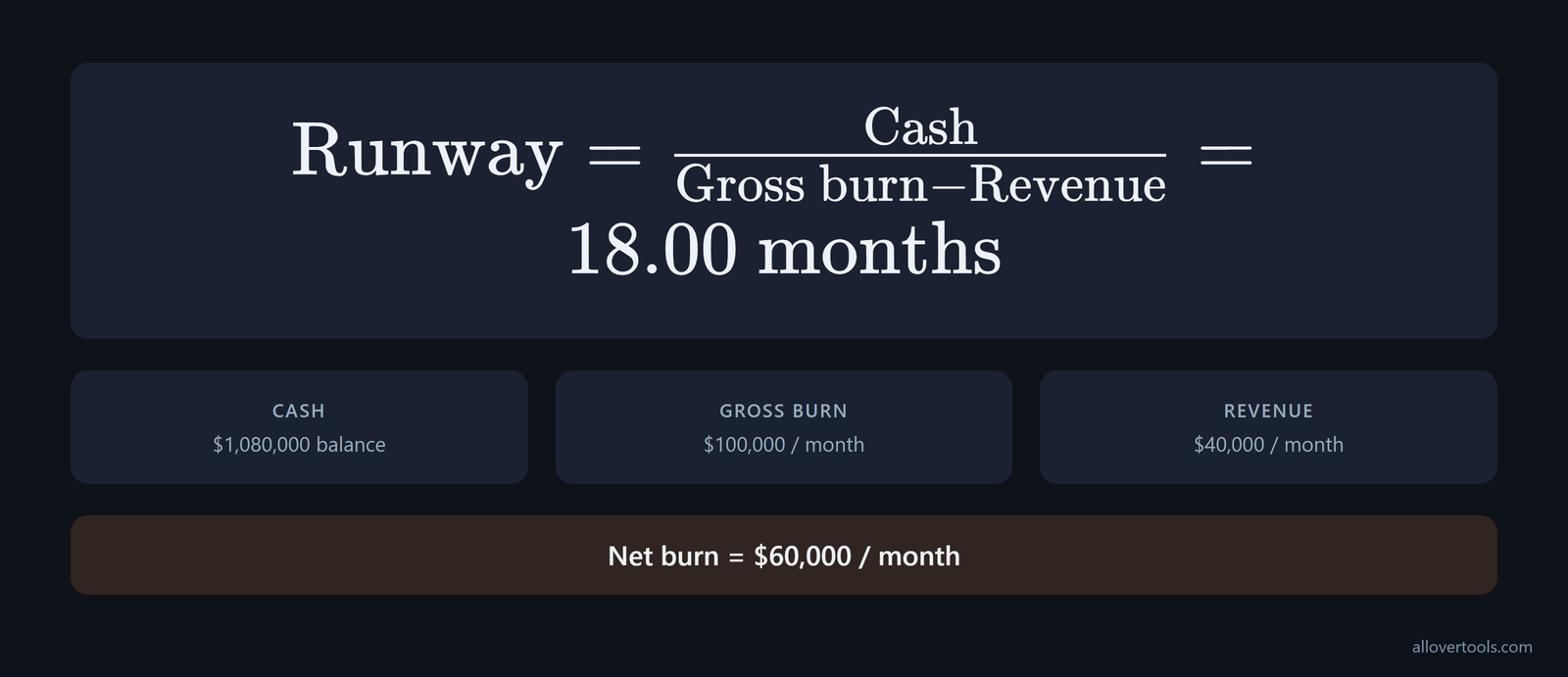
This 18.00-month result holds revenue and expenses constant. It does not forecast changing revenue, spending, hiring, or financing events.
It also gives a starting point to raise capital based on burn: the funding discussion is tied to monthly cash depletion.
If net burn is zero or negative, the calculator shows that revenue covers or exceeds expenses. With zero cash and positive net burn, it shows 0.00 months. The tool uses entered values only. It does not call fetch, XMLHttpRequest, sendBeacon, or submit a form, so the calculation runs in the browser.
The static result needs more context at seed stage, where burn and the gap between rounds can both be high. Most seed-stage startups burn $50,000–$100,000 per month, with a median around $75,000, while the median time between funding rounds is now nearly 700 days. Warp recommends 24–30 months of cash runway, starting fundraising with 9–12 months remaining, and never allowing runway to fall below 6 months during an active raise, according to the seed-stage benchmarks. Compare the calculator's monthly net burn with the expected interval between financings before accepting a shorter target.
Use matching periods before trusting the result
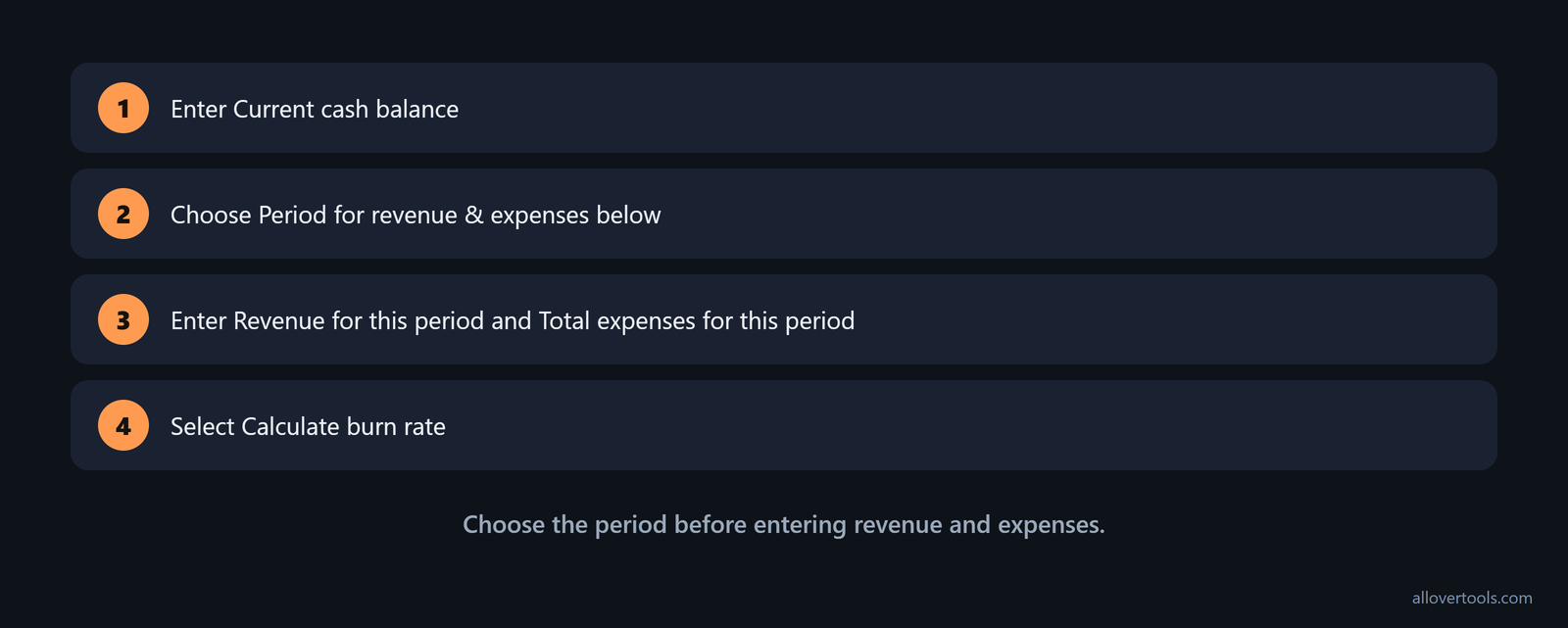
- Enter Current cash balance.
- Choose Period for revenue & expenses below.
- Enter Revenue for this period and Total expenses for this period for that same period.
- Select Calculate burn rate.
Choose the period before entering the two operating figures. The calculator normalizes both together. Currency symbol changes the displayed label only; it does not convert the values.
How do you work backwards from runway to a raise date?
Plan in relative months so the trigger can move when actual cash changes. In this planning example, cash is $600,000, monthly revenue is $20,000, and monthly expenses are $80,000. Net burn is $60,000 per month, so current runway is $600,000 / $60,000 = 10.00 months.
Turn a runway target into a raise-start trigger
Use the equation:
Remaining-runway trigger = Fundraising process time + Buffer
4 months + 2 months = 6 months
The four-month process and two-month buffer are planning values for this example. On the 10-month runway timeline, outreach begins after month 4, when six months remain. Starting only when the model reaches zero leaves no room for diligence delays or a failed plan.
Use the runway that must remain at close as the starting point, not only the date when cash reaches zero. The stage-based planning matrix gives pre-seed a 6-month minimum and 12-month ideal to start, a 2–3-month process, and at least 9 months at close; seed an 8-month minimum and 15-month ideal, a 3–4-month process, and at least 12 months at close; Series A a 9-month minimum and 18-month ideal, a 4–6-month process, and 12–15 months at close; Series B a 10-month minimum and 18-month ideal, a 4–6-month process, and 15–18 months at close; and Growth a 12-month minimum and 24-month ideal, a 6–9-month process, and at least 18 months at close, according to the stage timing matrix. Pick the matching row, subtract the process and buffer from the required close runway, and use that month as the outreach trigger.
The 18–24-month target assumes that raising a round takes approximately 6 months and that the next fundraise starts with 6–9 months of runway left, as cited from the NYU Entrepreneurial Institute in the NYU rationale. That leaves 12–18 months for execution before the raise process. If the process takes longer, move the trigger earlier.
Include process length in the stress test. Puzzle.io's 2026 guidance says VCs expect 24–30 months of runway, recommends opening the raise with 12–18 months remaining, and puts the average raise at 6–9 months, as set out in the 2026 runway guidance. CRV also describes 24 months as safer than 18 in the current market, recommends opening with 12–18 months left, and says the round should fund 18–24 months after close tied to a specific milestone, with a 3–6-month process from first contact to close, according to CRV's runway guide. Run both durations through the equation and keep the earlier trigger when the downside matters more than the extra execution time.
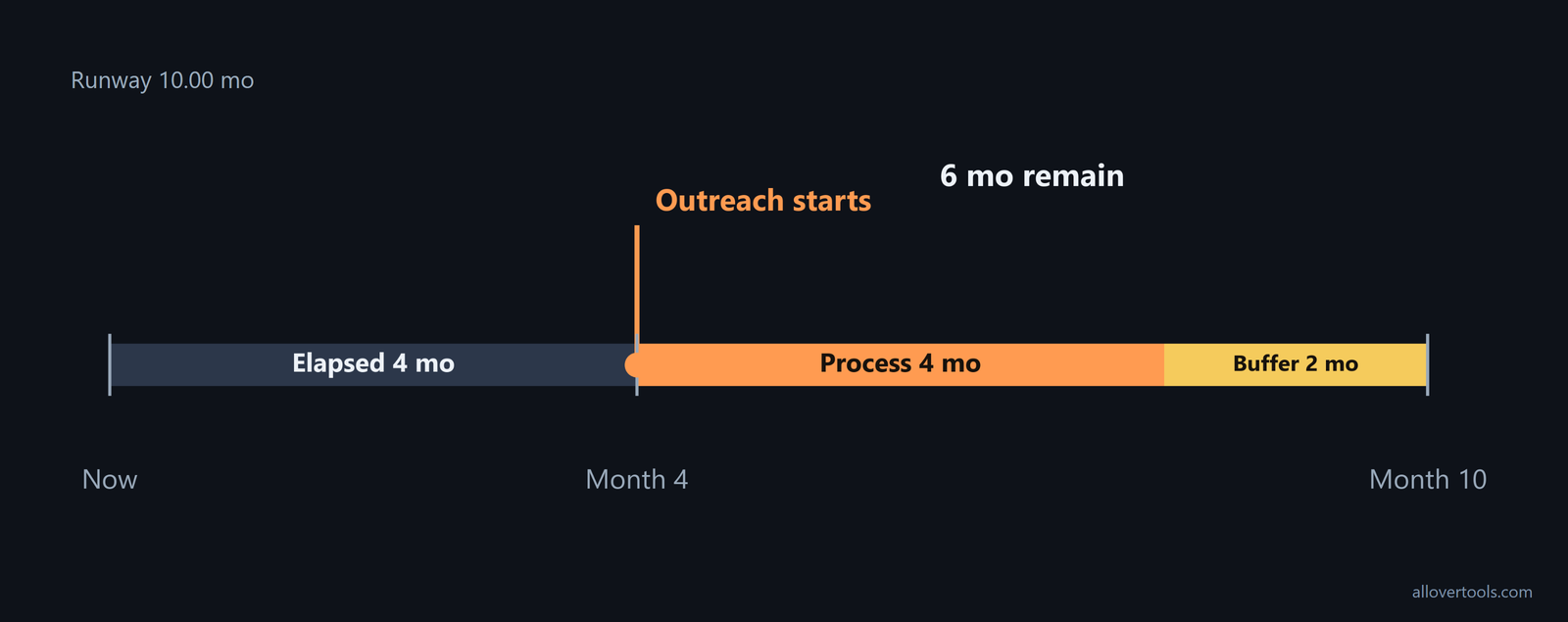
Treat the runway before next round as a trigger, not a calendar date. The trigger moves when actual burn, revenue, or the process estimate changes.
Size the raise from the burn you can defend
At the same monthly net burn, an 18-month post-raise target gives:
Target funding = Target post-raise months x Expected monthly net burn
18 x $60,000 = $1,080,000
That $1,080,000 covers runway before growth changes or financing-specific costs. Set the milestone, estimate burn through the process, subtract process time and buffer from current runway, set the trigger, and update the ask as actuals change. A live model must also add hiring changes, revenue changes, and financing-specific costs.
How do revenue growth and spending change fundraising timing?
Runway is not fixed when revenue and expenses change each month. The Cash Runway Calculator models each month with net burn(m) = expenses(m) - revenue(m) and cash(m) = cash(m-1) - net burn(m). When ending cash crosses zero, it interpolates the depletion point. Use the Cash Runway Calculator to enter monthly revenue growth, monthly expense growth, and a projection length.
Compare a base case with slower and faster revenue growth
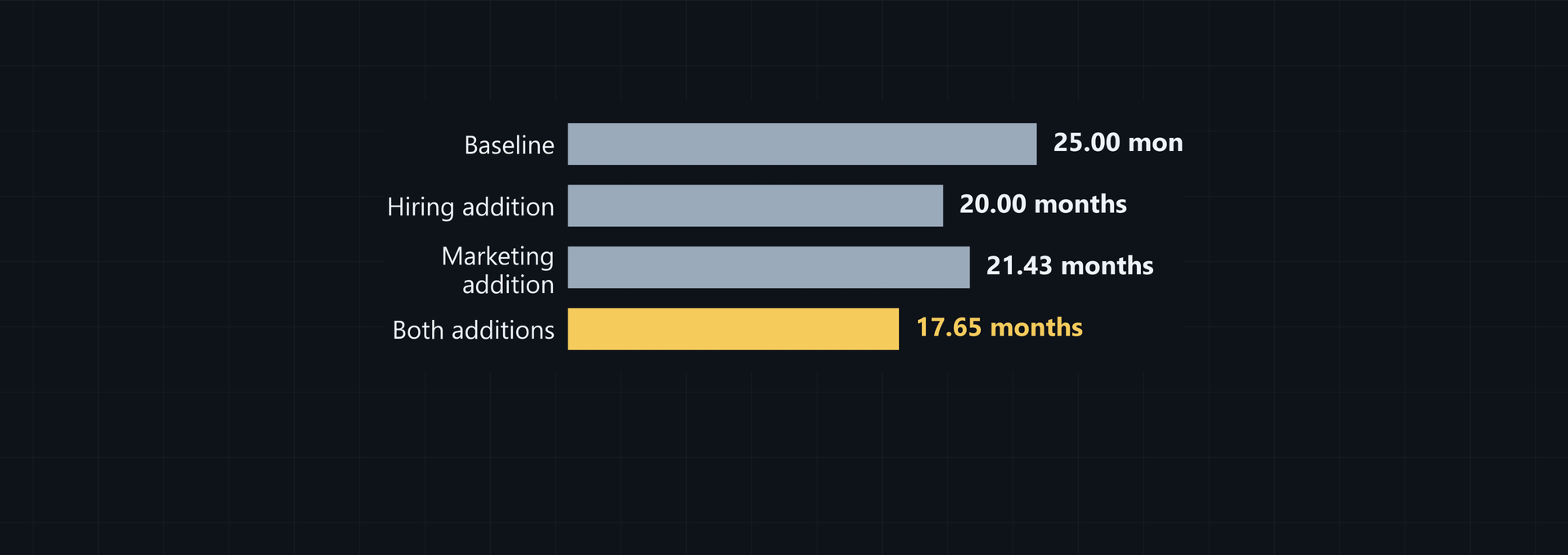
Each row below uses $1,080,000 starting cash, $40,000 month-one revenue, and the stated month-one expenses. The percentages are monthly growth assumptions for these examples.
| Chosen case | Revenue growth | Expense growth | Month-one expenses | Computed runway |
|---|---|---|---|---|
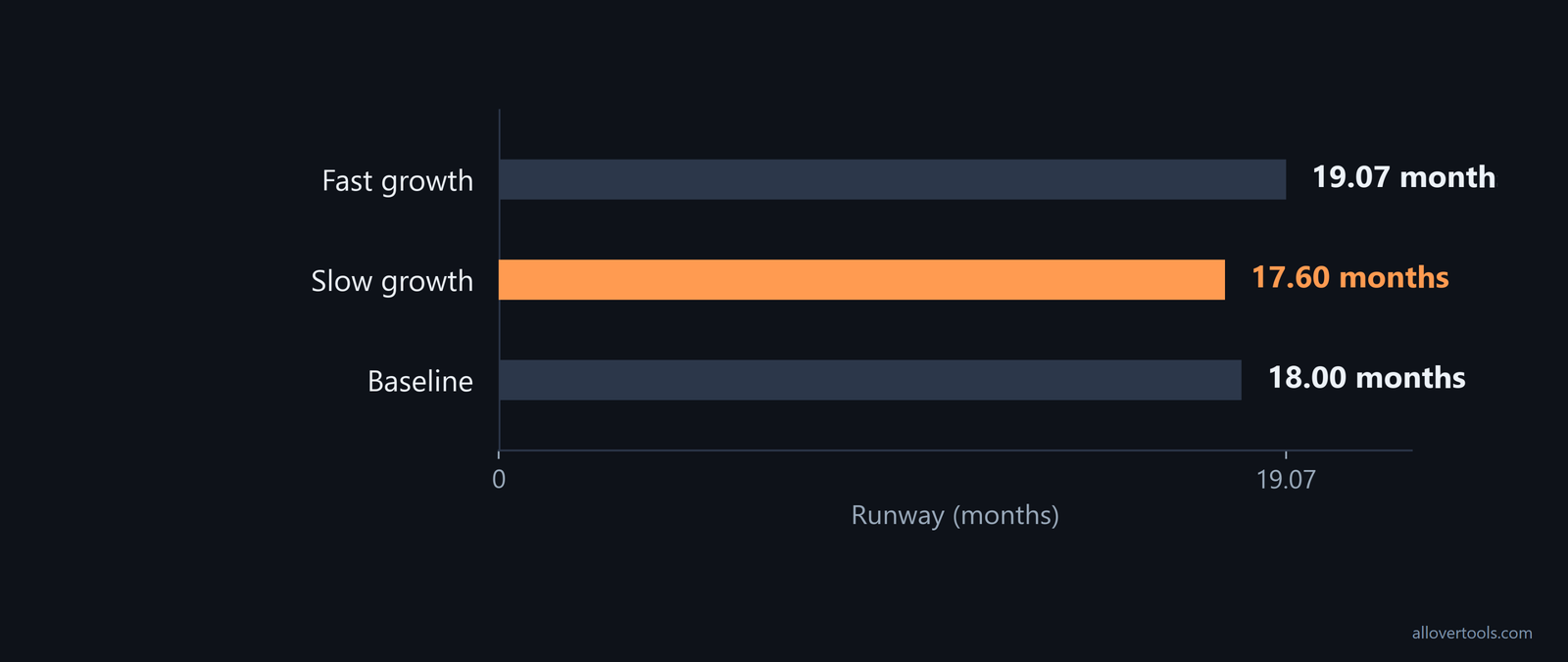
| Constant burn baseline | 0% | 0% | $100,000 | 18.00 months |
| Slower revenue growth | 2% | 1% | $100,000 | 17.60 months |
| Faster revenue growth | 3% | 1% | $100,000 | 19.07 months |
In the 2% case, expenses grow faster than revenue in the early projection, so runway falls to 17.60 months. In the 3% case, revenue growth outpaces the 1% expense growth, extending runway to 19.07 months. The baseline stays at 18.00 months because both growth rates are zero.
Test the growth plan against fundraising risk
Raise month-one expenses to $120,000 while keeping revenue at $40,000 and both growth rates at 0%. Net burn becomes $120,000 - $40,000 = $80,000 per month, and runway becomes $1,080,000 / $80,000 = 13.50 months.
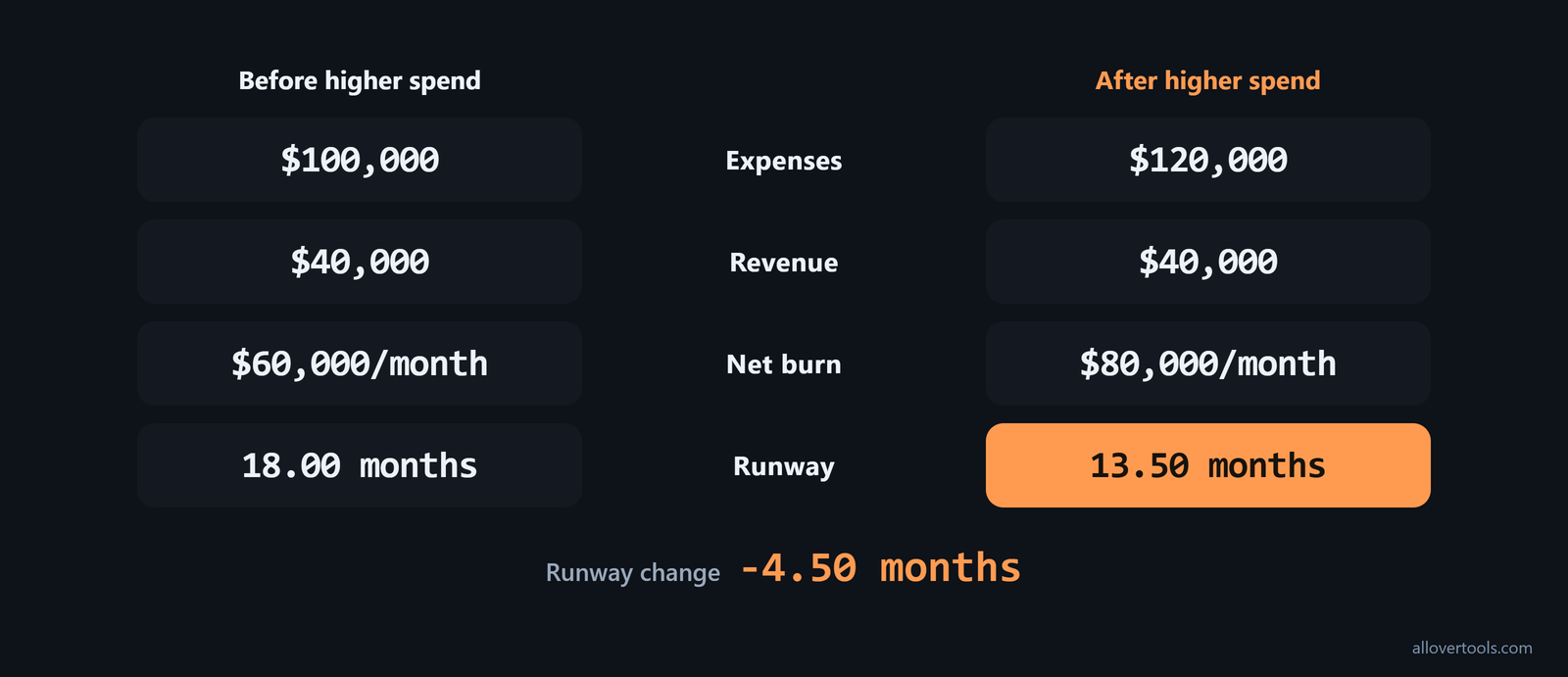
Approve faster spending only when the milestone gain, revenue evidence, and earlier raise trigger are explicit. Hiring or marketing ahead of proof can shorten the time available to raise if the added spend does not produce the assumed revenue.
When does a bridge round help runway planning?
A bridge round is interim financing for a defined gap to a milestone or the next financing. It is not a reason to leave the base plan unchanged. The delayed milestone, revised cash path, amount, purpose, and fallback still need to be stated.
Use a bridge for a defined gap
Suppose a milestone delay lasts three months and monthly net burn remains $60,000:
Bridge gap = Delay in months x Monthly net burn
3 x $60,000 = $180,000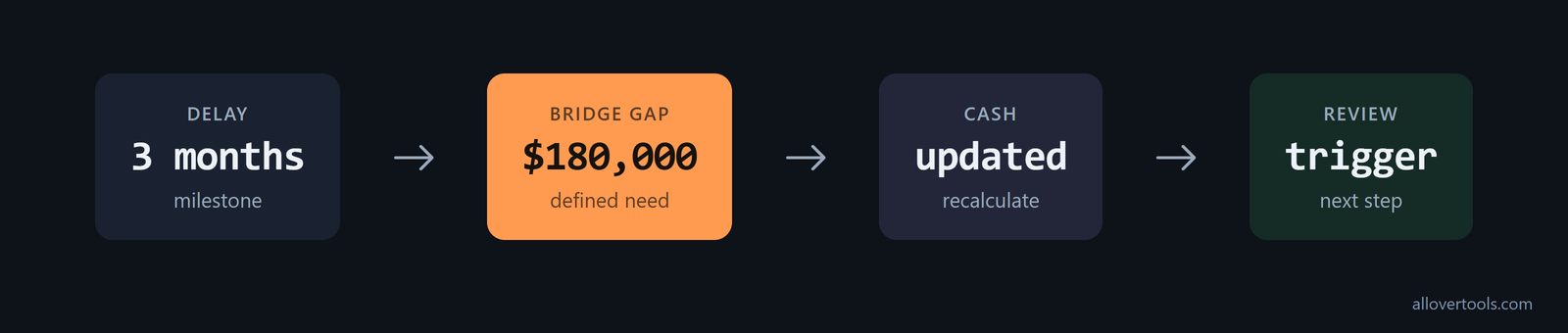
The $180,000 is before new spending or financing terms. Identify the delayed milestone, recalculate cash through the delay, state the bridge amount and what it buys, compare the bridge with reducing spend or changing the milestone, and set the next review trigger.
Disclose two risks. A bridge can postpone the raise while the underlying burn remains, and it can create a second timing dependency. Terms, valuation, and pricing are outside this runway calculation.
Show cash runway and funded runway separately once committed future capital changes the plan. Funded runway adds committed future funding to cash runway. In the example, 8 months of cash runway and a Series A closing in 3 months that adds 18 months produce an effective funded runway of approximately 23 months, as defined in the funded-runway explanation. In the board update, show the cash-only figure in the base model and label the committed funding, close timing, and resulting funded figure separately.
What should a board update say about fundraising timing?
A board update works better when each number points to a decision. Keep the order consistent, then change one assumption at a time in the stress test.
Report the numbers and the decision together
- Cash balance.
- Gross burn and net burn.
- Actual results versus plan.
- Base runway.
- Slower-revenue and higher-spend runway.
- Milestone status.
- Raise-start trigger.
- Raise amount or financing gap.
- Named risks.
- Decision requested, with one owner.
Net burn changes the depletion month. Milestone slippage changes the trigger. A longer raise process changes the buffer. Put the implication beside each metric, then end with one explicit decision or owner.
Check runway weekly when fundraising timing depends on a changing cash balance. Futureproof advises maintaining at least 12–18 months at all times, starting active fundraising at 9–12 months, and treating 6 months as the point at which the company negotiates from weakness because a raise typically takes 6–9 months, according to the weekly runway guidance. Put the measurement week, actual cash, current net burn, and revised trigger in each update so a monthly average does not hide a fast deterioration.
Stress-test the assumptions before they become commitments
Use the article's $1,080,000 cash, $40,000 revenue, and $100,000 expense baseline. Change one assumption at a time: slower revenue growth, higher expense growth, a later hiring month, a milestone delay, or a longer fundraising process. For each case, record the runway, the raise-start trigger, and the action it requires.
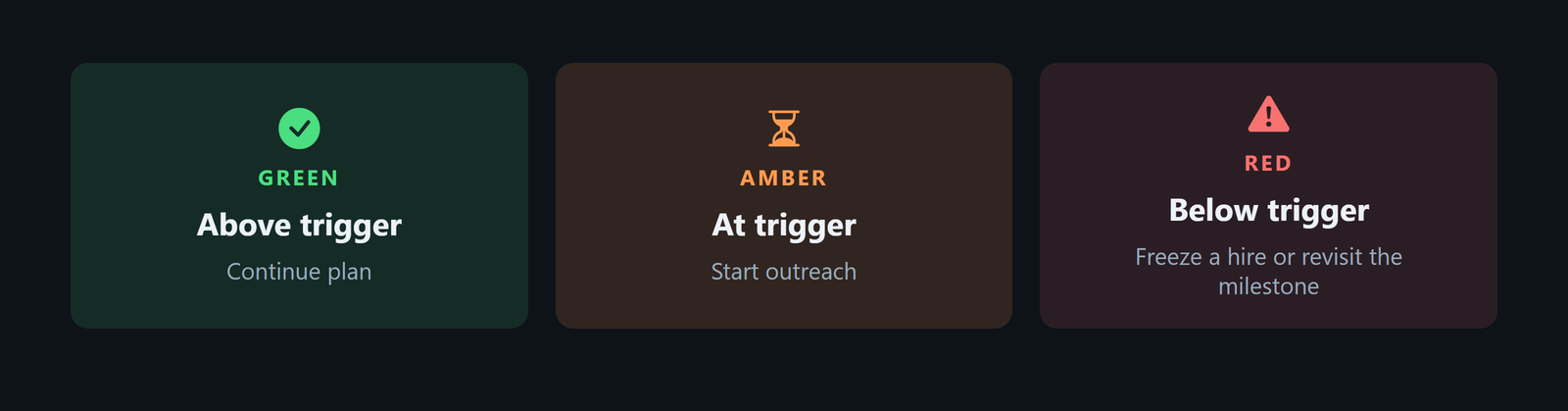
Set red, amber, and green states tied to remaining runway. Green means runway remains above the trigger and the owner continues the plan. Amber means runway reaches the trigger and the owner starts outreach. Red means runway falls below the trigger and the owner freezes a hire or revisits the milestone. Update the model with actual monthly cash data, then base the next board update on the changed assumptions rather than the old target.
Pair the custom trigger with explicit runway zones. One framework sets a goal of 18–24 months after any priced round, calls 9–12 months the Caution Zone, and defines less than 6 months as the Danger Zone. It also describes a standard fundraising process as 4–6 months and advises starting with at least 6 months left, as laid out in the runway zone guide. Use the labels to tie each zone to a board action:
| Runway zone | Remaining runway | Board action |
|---|---|---|
| Goal after a priced round | 18–24 months | Execute against the milestone and review actuals |
| Caution Zone | 9–12 months | Start or actively run the raise |
| Danger Zone | Less than 6 months | Treat the situation as an emergency |
The investor thresholds call for the same change in behavior: most VCs expect 18–24 months after a raise, 12+ months is the minimum, and below 12 months the company should cut costs, accelerate revenue, or start fundraising. At 6 months or less, immediate action is required because fundraising itself takes 3–6 months, according to the investor thresholds. Put the chosen action, owner, and deadline beside the zone in the board pack.
Frequently asked questions
How many months of runway should a startup target before raising?
There is no universal target. Set enough post-raise runway to reach the next milestone, cover the fundraising process, and retain a stated buffer. The 18-month figure here is a worked example, not a benchmark.
When should a startup start fundraising based on burn rate?
Start when remaining runway reaches the expected fundraising process plus the buffer. In the example, four months of process time plus two months of buffer creates a six-month trigger.
Does faster revenue growth always extend runway?
No. Runway improves only when revenue growth produces enough cash to outweigh the added expenses, and the growth arrives when the model expects it. The examples can therefore produce a shorter, unchanged, or longer result than constant burn.
What is a bridge round used for in runway planning?
A bridge can cover a defined gap caused by a delayed milestone or financing process. It should include recalculated runway, a specific amount and purpose, and a fallback plan.