To calculate a blended billing rate, divide a project's total billable amount by its total billable hours. That weighted result combines several role rates into one client-facing figure, with more influence given to roles that work more hours. The example below uses chosen agency values and shows when blended pricing fits better than role-based pricing.
What is a blended billing rate?
A blended billing rate is one hourly client-facing rate built from several role rates and their billable hours. It is weighted, so a role with more hours affects the result more than a role with fewer hours.
With role-based pricing, each role keeps its own rate. With blended pricing, the client sees one rate for the delivery team. The hours and amounts must use the same project scope, currency, and billing basis for the calculation to be useful.
That is why a simple average can misstate the result. If a developer works more billable hours than a strategist, the developer's rate carries more weight. The project hour mix controls the final figure.
Managed service programmes use the same idea. A blended rate is one average bill rate for workers whose individual rates differ. The client and provider agree on one rate for each job category instead of invoicing each worker separately. The model is most common in large staffing programmes, managed services arrangements, and consulting-style engagements where workers with varying skills deliver a collective output, as described in the managed-service definition. That distinction helps show whether one rate covers a delivery team or a wider job category.
How to calculate a blended billing rate
Use this formula:
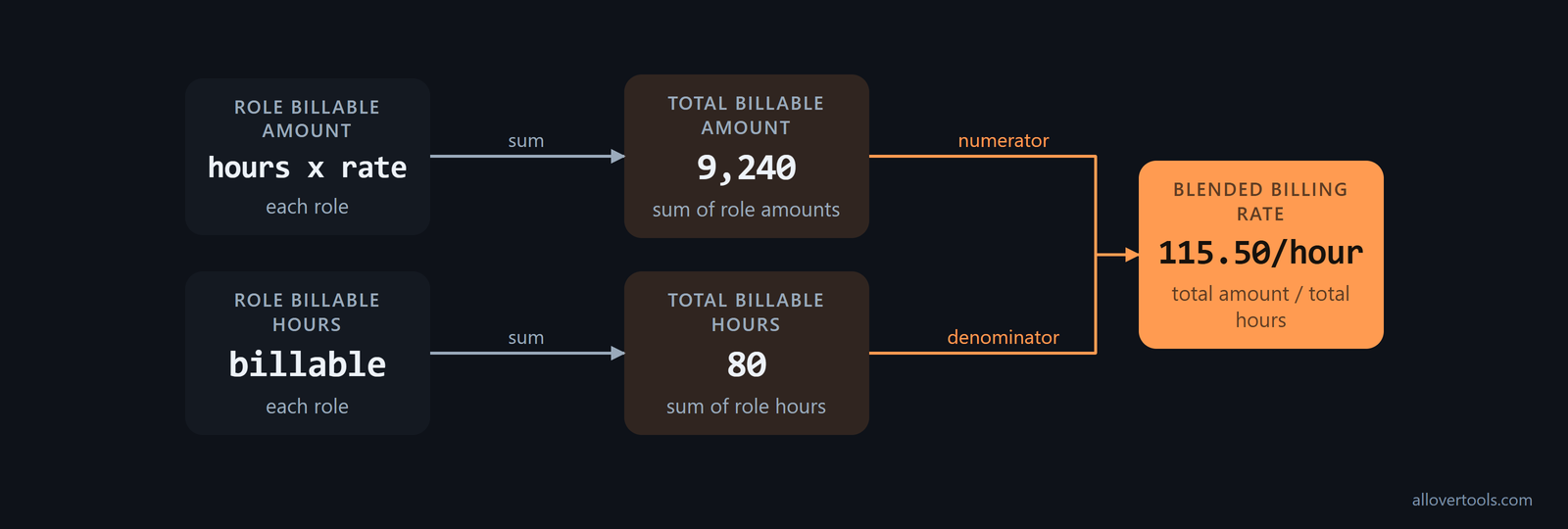
Total billable amount ÷ Total billable hours = Blended billing rateTotal billable amount is the sum of each role's billable hours multiplied by that role's hourly rate. Total billable hours is the sum of those role hours. For multiple role rates per project, follow these steps:
- List every role included in the project.
- Record only the hours that are billable for this scope.
- Multiply each role's hours by its rate.
- Add the line-item billable amounts.
- Add the role hours.
- Divide the amount total by the hour total.
Sometimes the plan gives you percentage shares instead of raw hours. Multiply each role's bill rate by its share of the hours, add the results, and divide by the total share. If the shares do not add up to 100%, divide each one by the combined share first. That keeps the weighting correct, as the percentage method explains. The four-role example already gives raw hours, so use its 80-hour denominator directly.
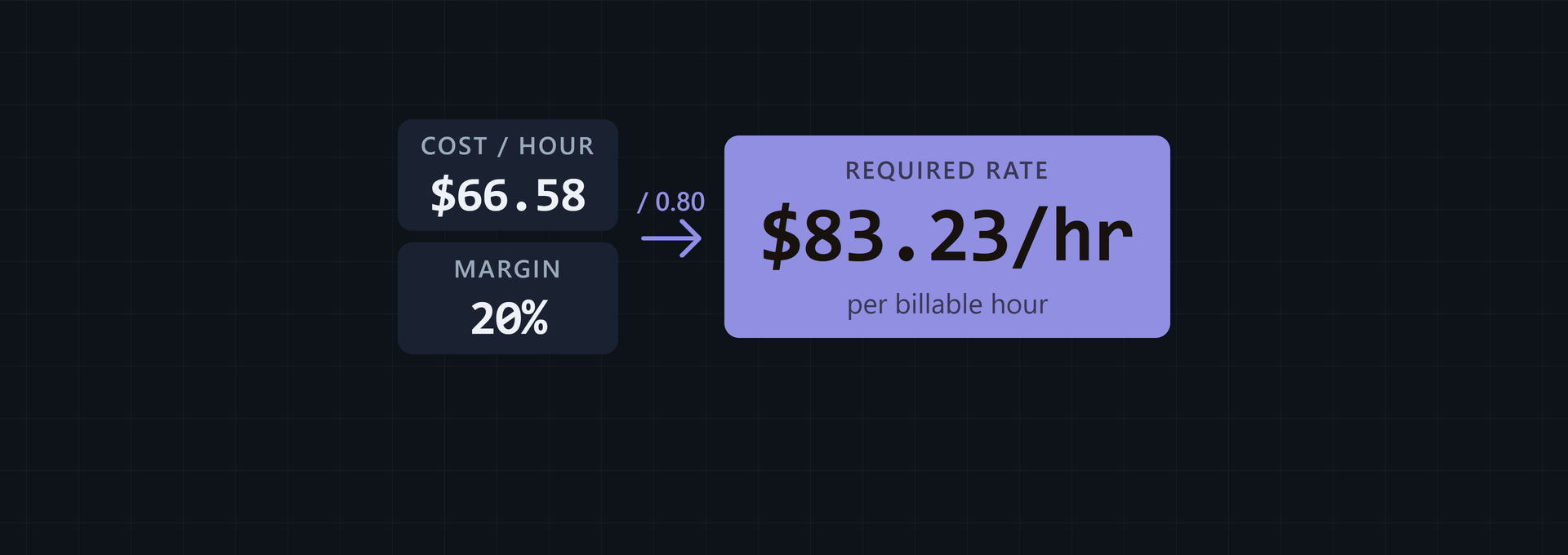
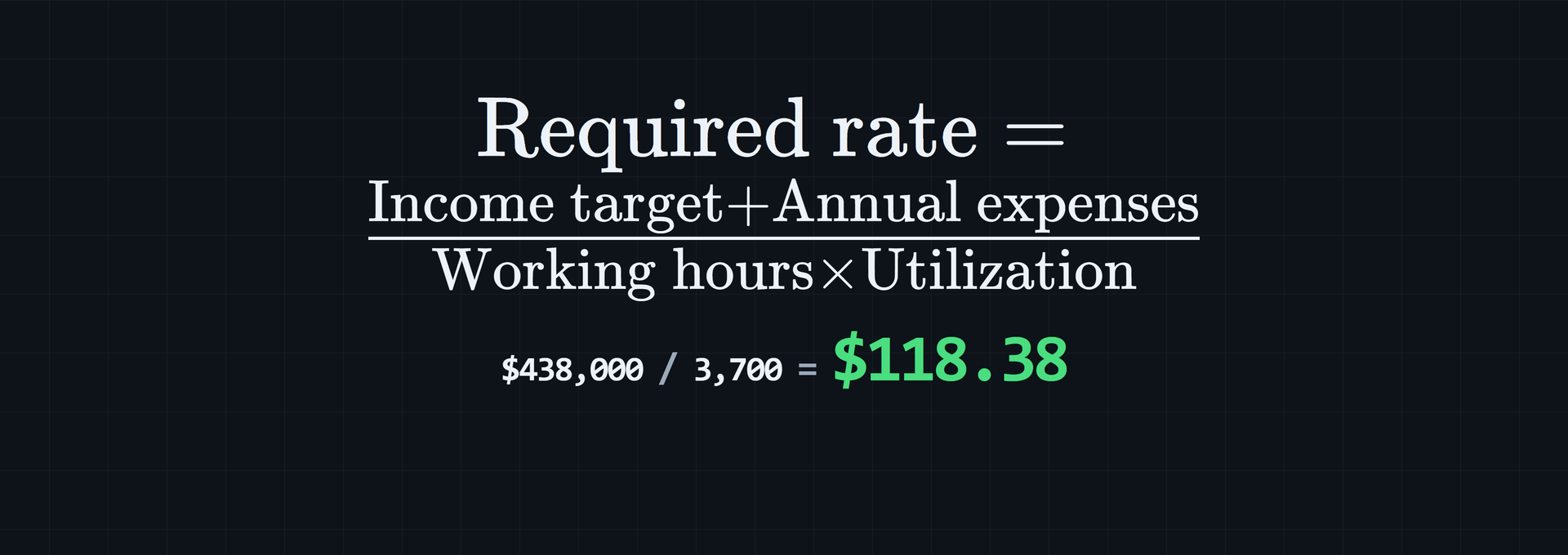
Unless every role has the same billable hours, do not add the role rates and divide by the number of roles. Use the Billable Hourly Rate Calculator as a separate agency-rate check. It uses Annual income target, Annual business expenses, Total working hours per year, and Utilization rate (%) to calculate a required billable rate; it does not mix several project roles.
Build the weighted totals
Write each multiplication before dividing:
Role billable amount = Role hours × Role rate
Total billable amount = Sum of all role billable amounts
Total billable hours = Sum of all role hours
Blended billing rate = Total billable amount ÷ Total billable hours
A role with zero billable hours contributes zero hours and zero billable amount to the project. Keep it in the working list if it is part of the planned team, but leave it out of the totals.
Check the inputs before dividing
Use one currency, one project scope, and one definition of billable hours throughout. Exclude internal non-billable time from both the project numerator and denominator. If the scope includes 80 billable hours, internal admin hours do not belong in that total.
The result uses the assumptions you enter. It is not a market-rate lookup, and it cannot tell you whether the scope is complete or the role rates cover internal costs.
Agency case study: a four-role project
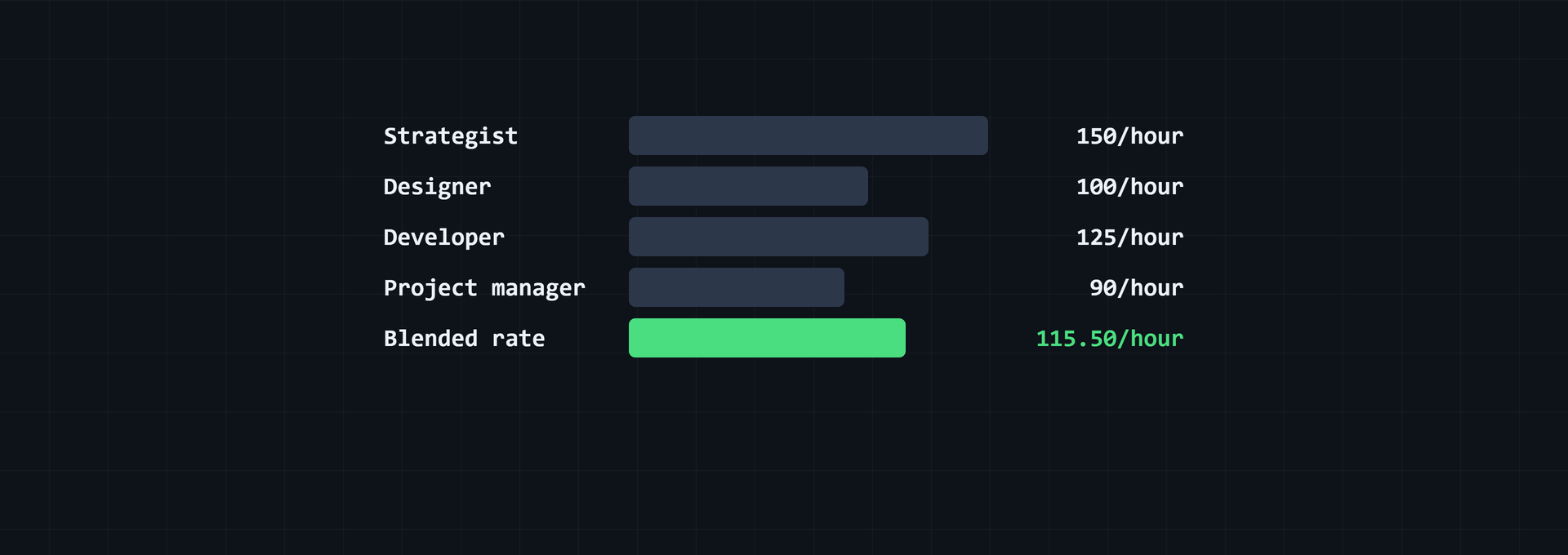
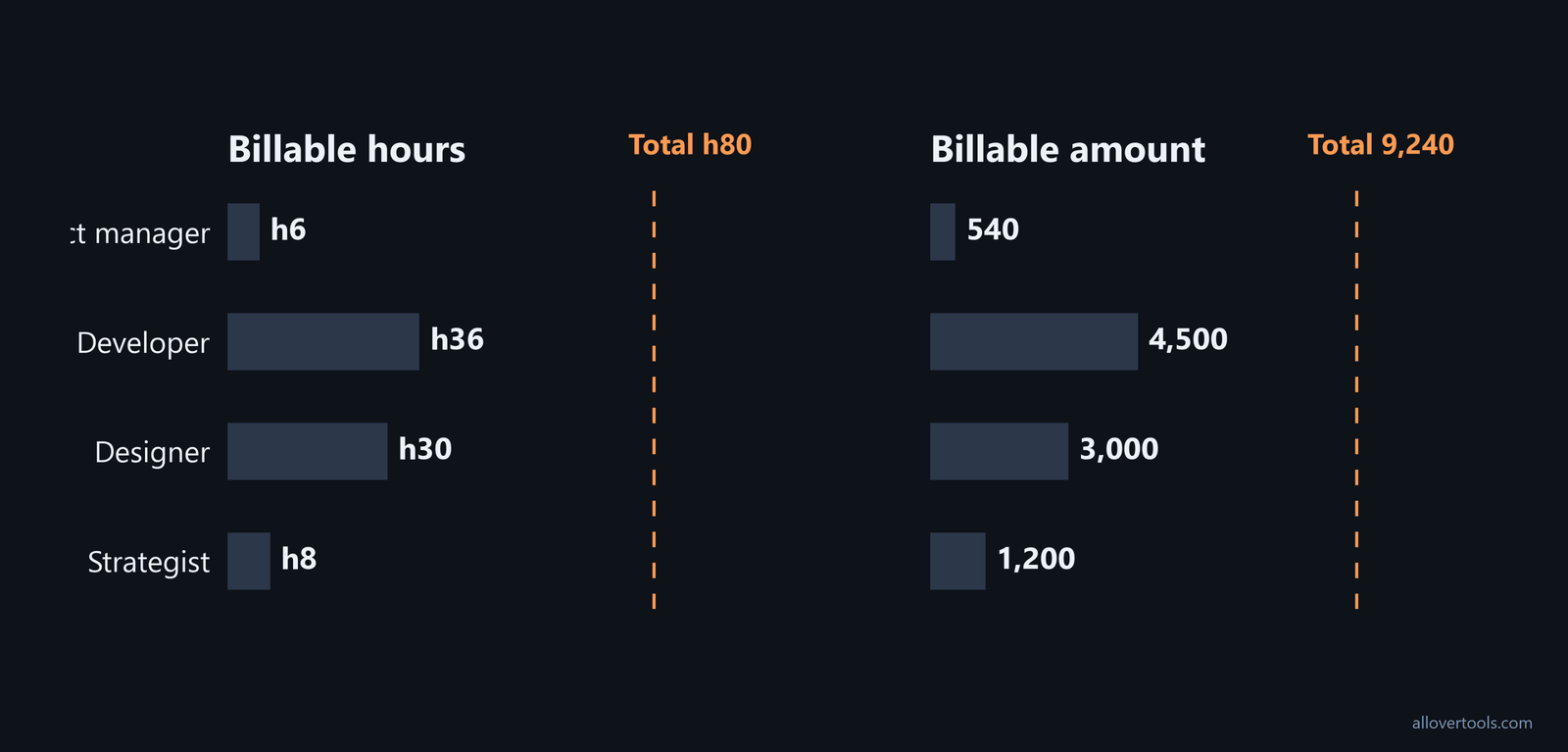
This example uses chosen values, not client data. It has four roles. The line items show the hours, rate, and multiplication so the average billable rate per team can be checked before the totals are divided.
Line-item billable amounts
| Role | Billable hours | Hourly rate | Billable amount |
|---|---|---|---|
| Strategist | 8 | 150 | 8 × 150 = 1,200 |
| Designer | 30 | 100 | 30 × 100 = 3,000 |
| Developer | 36 | 125 | 36 × 125 = 4,500 |
| Project manager | 6 | 90 | 6 × 90 = 540 |
The resulting blended rate
The line items total 80 billable hours and 9,240 in billable amount:
Total billable hours = 8 + 30 + 36 + 6 = 80
Total billable amount = 1,200 + 3,000 + 4,500 + 540 = 9,240
Blended billing rate = 9,240 ÷ 80 = 115.50/hour
The simple average of the four role rates is 116.25/hour, calculated as (150 + 100 + 125 + 90) ÷ 4. It is not the blended result for this hour mix because it gives the 8-hour strategist the same weight as the 36-hour developer.
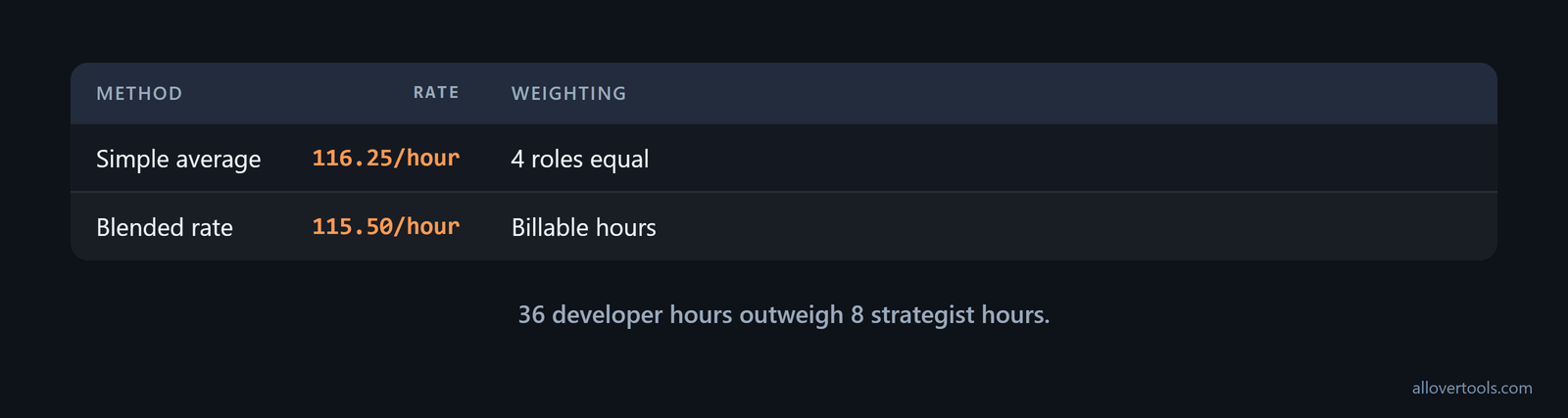
In a proposal, state the 115.50/hour blended rate, the agreed scope, the planned 80 hours, and the resulting 9,240 planned billable amount. Keep the proposal's assumptions beside those figures.
A court-reported consulting blend
A restructuring matter reported by a court shows how senior and junior time can become one realized hourly figure. From January to March 2026, Alvarez & Marsal billed $14,186,329 for 17,112 hours as debtor's adviser in the Marelli case, producing a blended $829.02/hour across all staff. FTI Consulting billed a blended $857.07/hour as creditors' committee adviser in the same case and period. Use these figures as matter-level reference points when checking how a complex engagement reports one rate across its staff. They do not replace the agency's own role hours; the consulting case summary reports both actual billed results.
Benchmark a blended rate by sector
Use a sector range as a starting point when checking whether a calculated rate makes sense. It does not replace the project's own role mix. Small software and development shops generally fall around $100 to $175 per hour, marketing agencies around $85 to $150, and professional services firms around $120 to $225. Firm size, seniority mix, and market move the ranges. Region, specialization, and client type affect actual rates too, according to the sector benchmark ranges. Compare the article's chosen $115.50/hour with the range that fits the agency's sector and positioning, then keep the project calculation and the benchmark as separate checks.
| Sector | General blended-rate range |
|---|---|
| Small software and development shops | Roughly $100 to $175/hour |
| Marketing agencies | $85 to $150/hour |
| Professional services firms | $120 to $225/hour |
Legal rates show why sector matters. The average blended hourly rate among the Am Law 100 reached $1,248 in 2026, an 8.1% increase over the prior year. The figure is based on billed rates that hit invoices, not rack rates or requested increases, according to the 2026 rate report. Another 2025 reference puts Am Law 100 firms at $1,145 blended hourly, with top-tier partners at $1,635 per hour. At that rate, a standard 20-hour contract costs over $32,000, as the prior-year cost example illustrates. These figures provide context for comparing pricing models, not a substitute for the agency's own hours and costs.
How to present a blended rate to clients
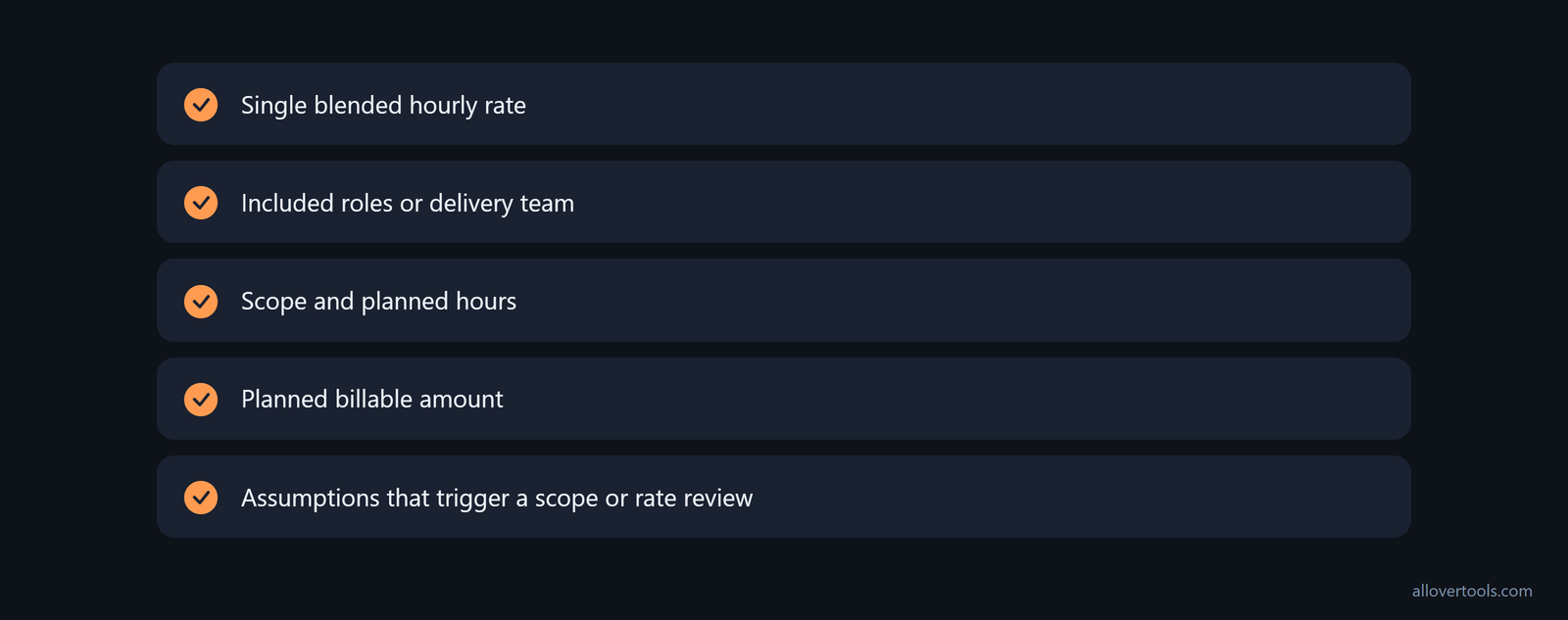
Put the rate next to the details that explain it. A proposal can show:
- Name the single blended hourly rate.
- Describe the included roles or delivery team.
- State the scope and planned hours.
- Show the planned billable amount.
- List assumptions that would trigger a scope or rate review.
One rate makes the client's view simpler, but it should not hide the work included. A client-facing explanation for this example could say, "The 115.50/hour rate is calculated from the planned role mix and is tied to the stated 80 billable hours and 9,240 planned billable amount."
A flat rate can protect a client's budget when staffing changes internally. It applies to all lawyers on a matter regardless of experience or individual billing rate, so legal spend stays steady when the firm changes who does the work. It also gives the firm an incentive to staff the matter more cost-effectively, as described in the fee-arrangements guidance. An agency should make the same promise only when its stated team and scope can support one rate through changes within that planned mix.
Although the calculation may produce a fraction, the quote can use a round number. Agencies commonly round and add a margin buffer, perhaps quoting $165 or $170/hour, as this agency pricing guidance describes. Record that rounded, buffered figure as the official quote. Keep the unrounded calculation and its assumptions so a later scope review shows exactly what changed.
These are example values, not a market benchmark or a guaranteed outcome. If the scope or role mix changes, review the rate and planned amount with the same formula.
How blended pricing affects utilization and profitability
The project blend answers a pricing question. The agency's capacity check answers a different one. Utilization is the share of total working hours that can actually be billed. A project blended rate does not turn admin, sales, or idle time into billable hours.
Use effective hourly rate for engagement profitability
Do not confuse the firm's blended rate with an engagement's effective hourly rate. The firm-wide figure divides total revenue by total billable hours for everyone who touched the work. That makes it useful for project quotes and market comparisons, but risky as a profitability measure: a healthy average can hide engagements that lose money. For a single engagement, divide its revenue by the actual hours it used, including absorbed scope additions and every unbilled hour spent managing the client. Track this engagement-level rate to see whether the work is profitable, as the profitability benchmark recommends.
Check required rate against utilization
Enter these four values in the Billable Hourly Rate Calculator: Annual income target = 72,000, Annual business expenses = 18,000, Total working hours per year = 2,000, and Utilization rate (%) = 75.
Billable hours = 2,000 × 75% = 1,500
Total revenue required = 72,000 + 18,000 = 90,000
Required billable hourly rate = 90,000 ÷ 1,500 = 60.00/hour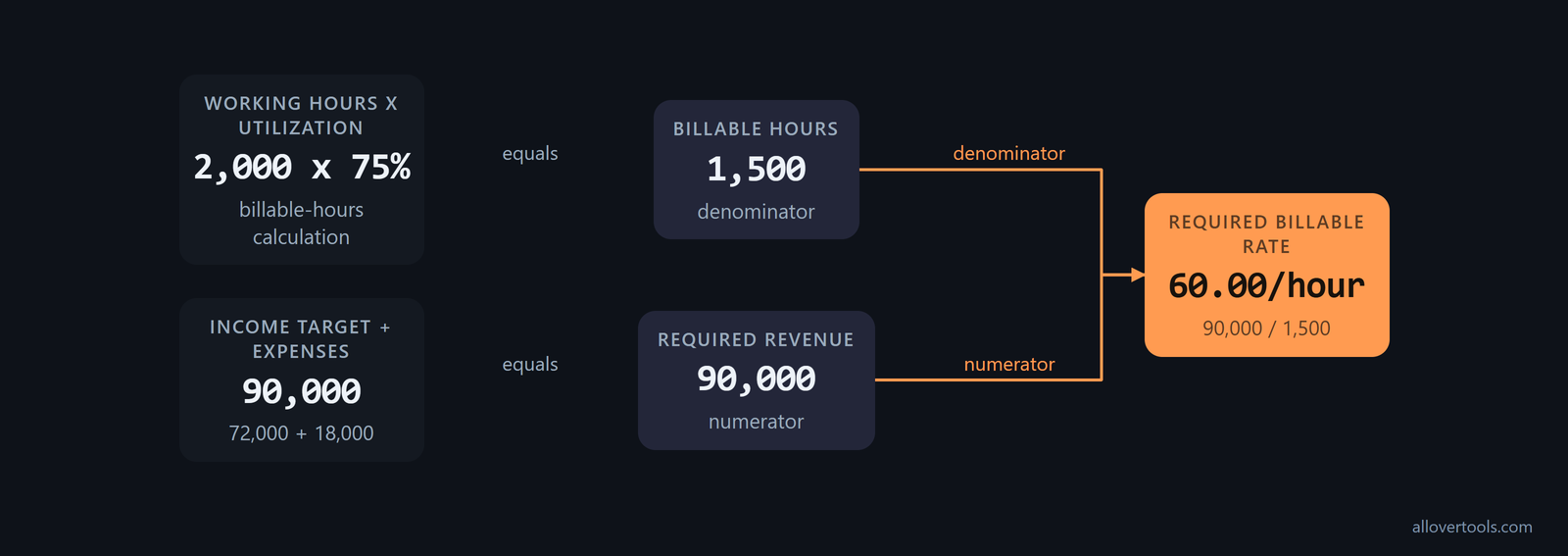
Here, 2,000 is total working hours and 1,500 is the portion treated as billable after applying utilization. If utilization changes while the income target, expenses, and working hours stay constant, the required rate changes because the denominator changes.
Check the denominator against a utilization benchmark. A healthy billable utilization rate for a professional services firm runs 74% to 84%, while the 2024 industry average was 68.9%, the lowest figure recorded in five years in Mosaic's analysis. When paid hours go to non-billable work, the realized blended rate across all hours falls below the headline billing rates, as the utilization benchmark explains. Check the utilization input before assuming that a strong quoted rate will produce the required annual revenue.
For a solo consultant, "blended rate" may use a different denominator. It can mean the effective rate across all working hours after non-billable time is accounted for, even when the quote is a day rate. The example target is $120,000 a year at 25 billable hours a week, requiring about $205/hour, roughly $5,128 a week across 900 billable hours a year, according to the consulting rate example. Use the team-hours formula for a multi-role project and this all-working-hours interpretation when setting a solo practitioner's pricing floor.
Check the project contribution
For the same chosen project, enter Project revenue = 9,240, Materials / direct costs = 600, Allocated overhead = 900, Labor hours = 80, Labor rate per hour = 55, and Estimated tax rate % (optional) = 0 in the Project Profit Calculator.
Labor cost = 80 × 55 = 4,400
Total project costs = 600 + 4,400 + 900 = 5,900
Project profit = 9,240 - 5,900 = 3,340
Project margin = 3,340 ÷ 9,240 × 100 = 36.15%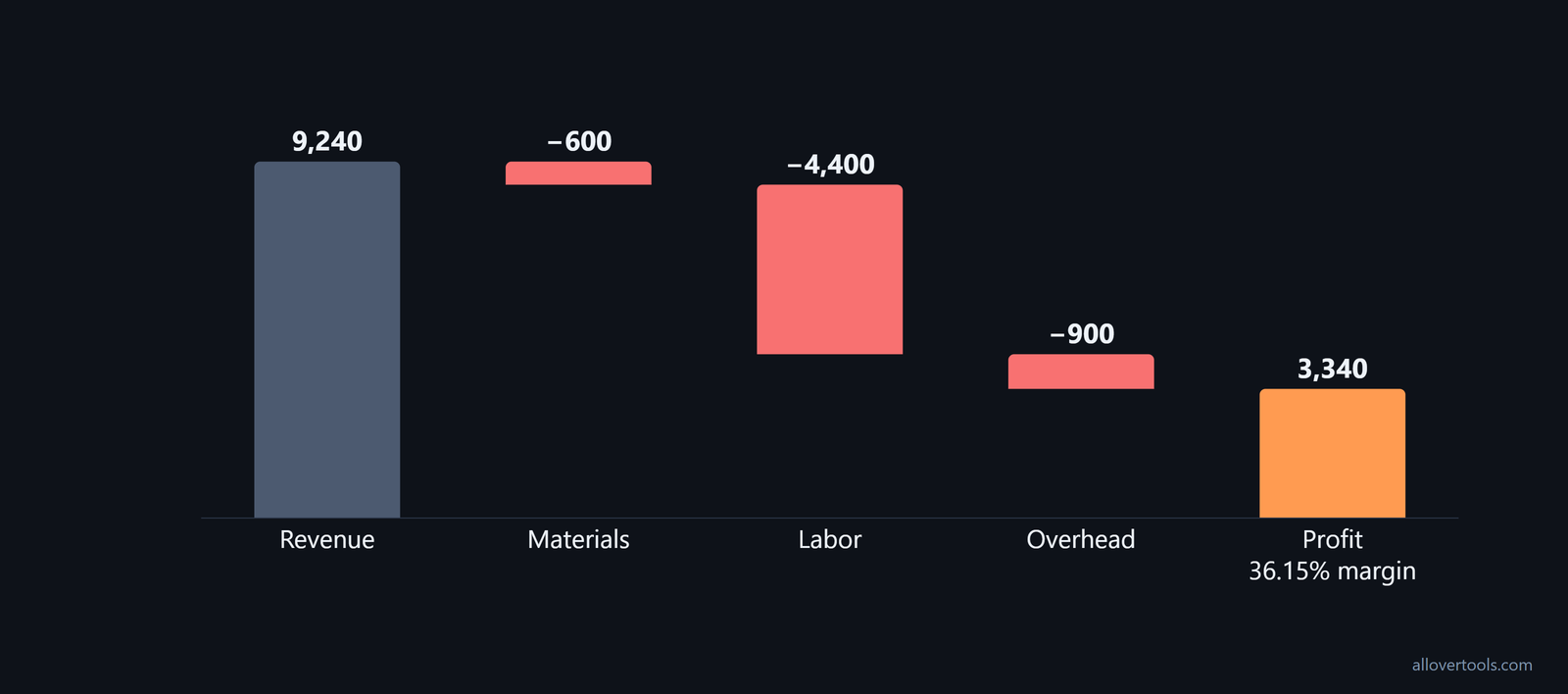
Labor rate per hour is an entered cost assumption here. The calculator performs the arithmetic from the supplied values. This is a contribution check under chosen assumptions, not a promise of actual profit.
If the scenario needs more context, the Business Profit Calculator includes Calculation mode options for Project profit and Billable hourly rate. The multi-role blend stays explicit here because the role-level hours and rates determine the client-facing figure.
The linked calculator source processes visitor-entered values locally. It contains no fetch, XMLHttpRequest, sendBeacon, or form submission of those values. That describes the supplied calculator workflow, not unrelated site analytics.
When to switch between blended and role-based rates
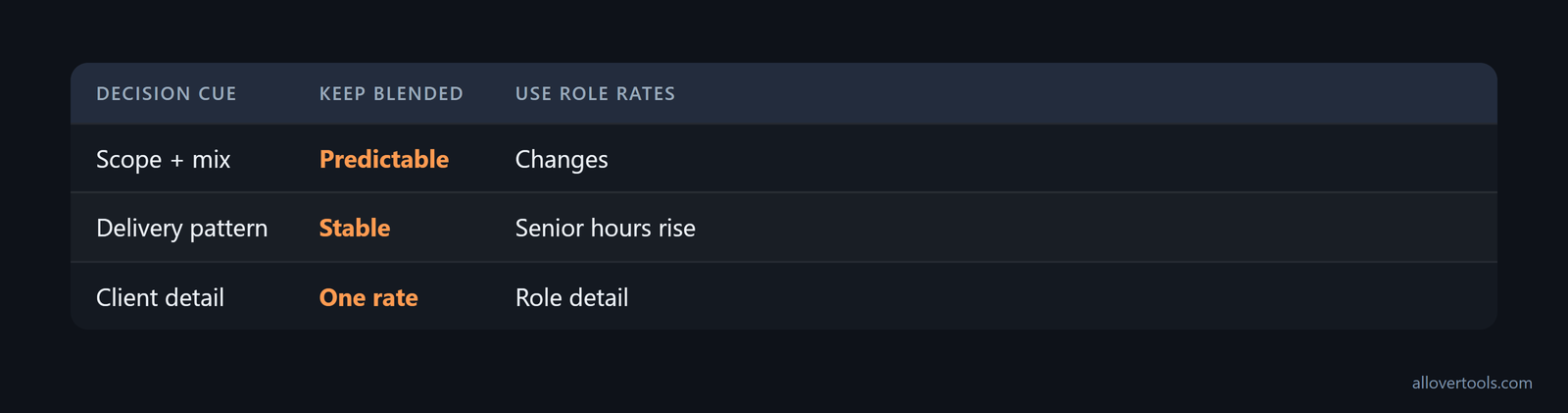
Keep a blended rate when the scope, role mix, and delivery pattern are predictable enough for one rate to explain the planned work. Use separate role rates when the mix is unusually senior, changes materially, or the client needs role-level transparency.
Use the hour mix to decide
One client-facing rate can work for a repeatable team mix because the planned weighting stays recognizable from project to project. A project dominated by senior or specialist hours deserves a fresh check. If one rate no longer represents the planned work, role-based pricing shows the change more clearly.
Check the senior share once delivery begins. The blended rate weights each role's rate by the hours that role actually works. If senior participation rises above plan, the margin can erode. A senior at $400 for 30% of the hours and a mid-level at $200 for 70% produces a $260 blended rate. The client sees one number, so compare actual senior hours with the planned weighting before carrying the same rate into the next scope, following the hour-mix warning.
- Confirm the scope.
- Check the planned role hours.
- Review the rate assumptions.
- Decide how much role detail the client needs.
- Review the expected margin.
Use blended pricing when staffing can move down
A formal blended arrangement can cover all attorneys on a matter or portfolio. It can also use a separate blend for each timekeeper level, such as partner, counsel, and associate. Overall spend becomes more predictable because the bill does not change with internal staffing decisions. The arrangement encourages work to move to more junior team members. If the work cannot be allocated to attorneys with rates below the blended rate, the blend is simply a discount off standard rates. This setup suits rate-sensitive, routine, or repeat litigation with a predictable procedural course that more junior, lower-rate attorneys can handle, as the value-based billing guide sets out. An agency should apply the same staffing test: confirm that the planned lower-rate capacity is real before calling the result a sustainable blend.
Recalculate after scope changes
This second example also uses chosen values: 20 Designer hours at 100/hour and 20 Developer hours at 125/hour.
Total billable amount = (20 × 100) + (20 × 125) = 4,500
Total billable hours = 20 + 20 = 40
New blended billing rate = 4,500 ÷ 40 = 112.50/hour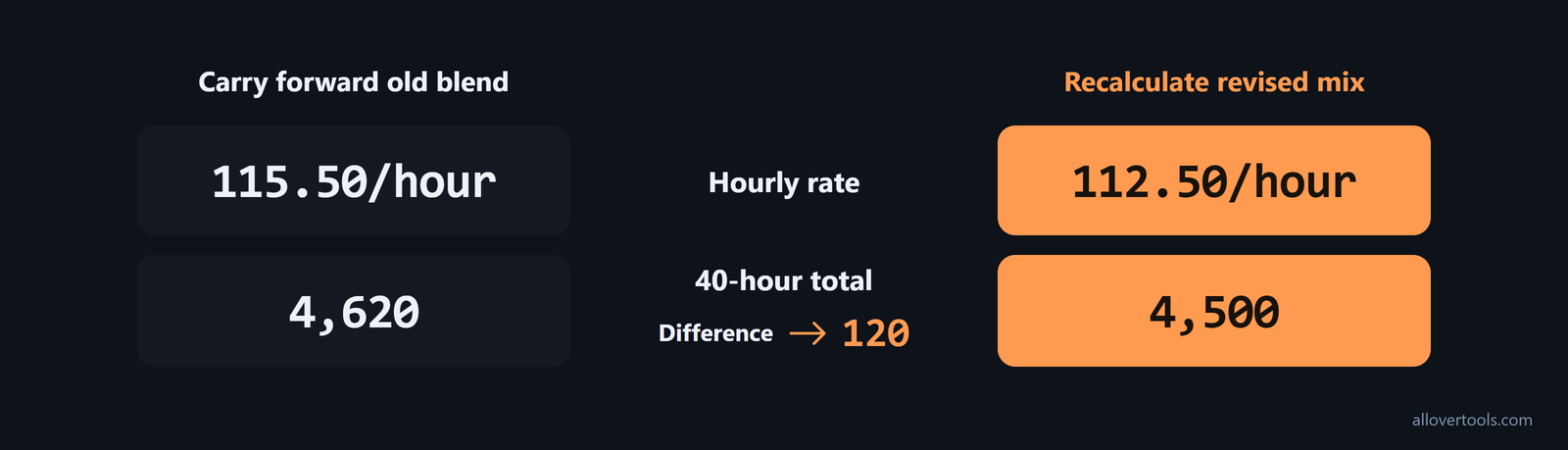
Charging 115.50/hour for 40 hours would produce 4,620. That is 120 more than the 4,500 role-based total. Check whether the difference is intentional and supported by the revised scope, then recalculate instead of carrying the old blend forward.
Advantages, drawbacks, and limits of blended pricing
One rate is easier to communicate, reduces role-by-role negotiation, and lets the agency sell a team outcome. It gives the proposal one hourly figure tied to a planned delivery mix.
A blended figure can help compare an alternative provider's pricing model with traditional outside counsel. Axiom reports a blended hourly range of $152 to $375, below the average hourly bill rate of every Am Law 200 tier. The comparison runs from $516 in the Am Law 151-200 tier to $990 in the Am Law 1-50 tier, with the gap widening as firm rank rises. Its methodology uses a mix of partner, associate, and paralegal time to estimate what the same category of work would cost under traditional outside counsel, as the legal cost comparison explains. Use the figures to compare like-for-like work and staffing mixes, not to treat the alternative provider's range as an agency rate.
The trade-off is visibility. The rate can hide the role mix, under-recover expensive roles when their hours rise, or look opaque when the client expects role-level detail. A single rate does not remove the need to track who is doing the work.
The formula does not decide scope, utilization, taxes, write-offs, unpaid invoices, or whether the entered internal cost assumptions are realistic. After a change, recompute total billable amount and total billable hours. Keep billable and non-billable time separate, then compare the project result with the agency's required rate and profit assumptions before approving the proposal.
The same total-cost divided by total-usage approach applies beyond people and projects. AWS calculates Amazon EC2 blended rates by the hour. It calculates the Amazon S3 standard-storage blended rate by dividing total storage cost by the amount stored per month. In its example, $6,720 divided by 95,000 GB produces a blended rate of $0.070737/GB. AWS also uses blended rates across Reserved Instances, On-Demand pricing, and accounts to allocate blended costs across member accounts, as the AWS billing example shows. The agency version uses billable hours as the usage unit, but it still needs one total amount and one matching total usage figure.
Frequently asked questions
How do you calculate a blended billing rate for an agency?
Calculate each role's billable hours × rate, add those billable amounts and hours, then divide Total billable amount ÷ Total billable hours.
Is a blended hourly rate the same as the average of team rates?
No. The rate is weighted by billable hours. The chosen example produces 115.50/hour, while its simple four-rate average is 116.25/hour.
When should an agency use blended pricing instead of role-based rates?
Choose blended pricing for a predictable scope and role mix where one client-facing rate is useful. Choose separate role rates when the mix changes or the client needs role-level transparency.
Does utilization change the blended billing rate?
Utilization changes the agency's required rate by changing how many total working hours become billable. With the chosen inputs, 75% utilization produces 1,500 billable hours and a 60.00/hour required rate.
What should an agency show a client with a blended rate?
Show the single rate with the scope, planned hours, included team roles, planned billable amount, and assumptions that would trigger a price review. The chosen example is not a benchmark.