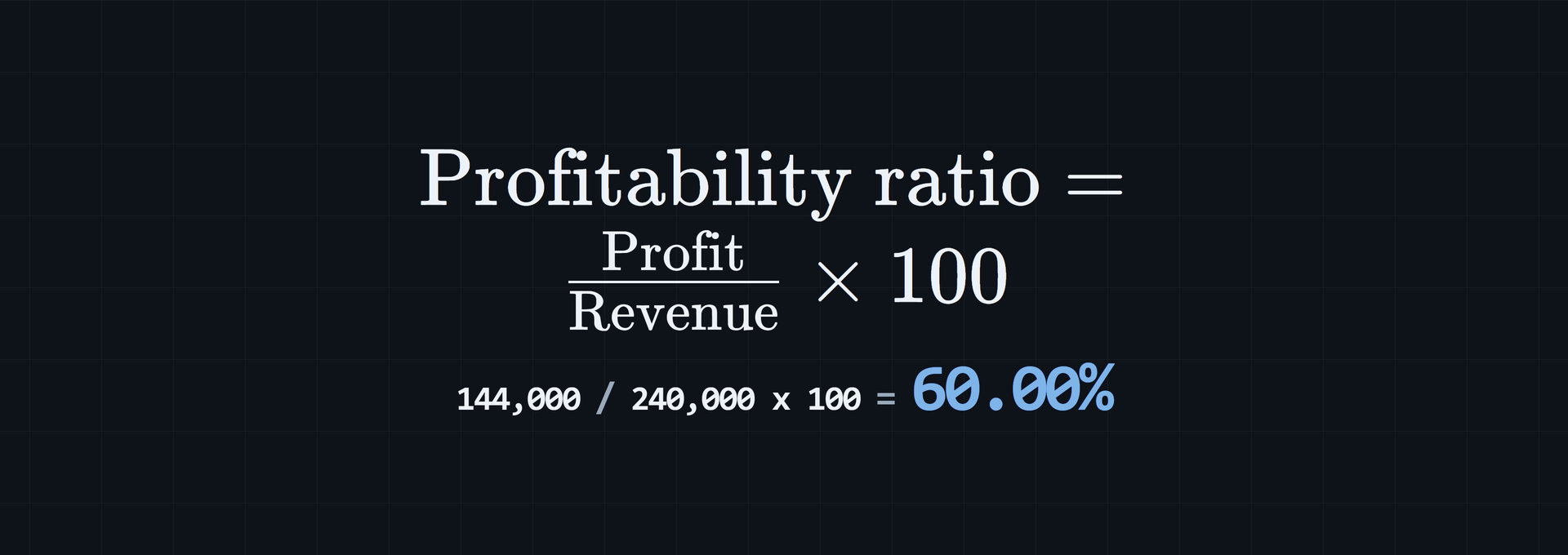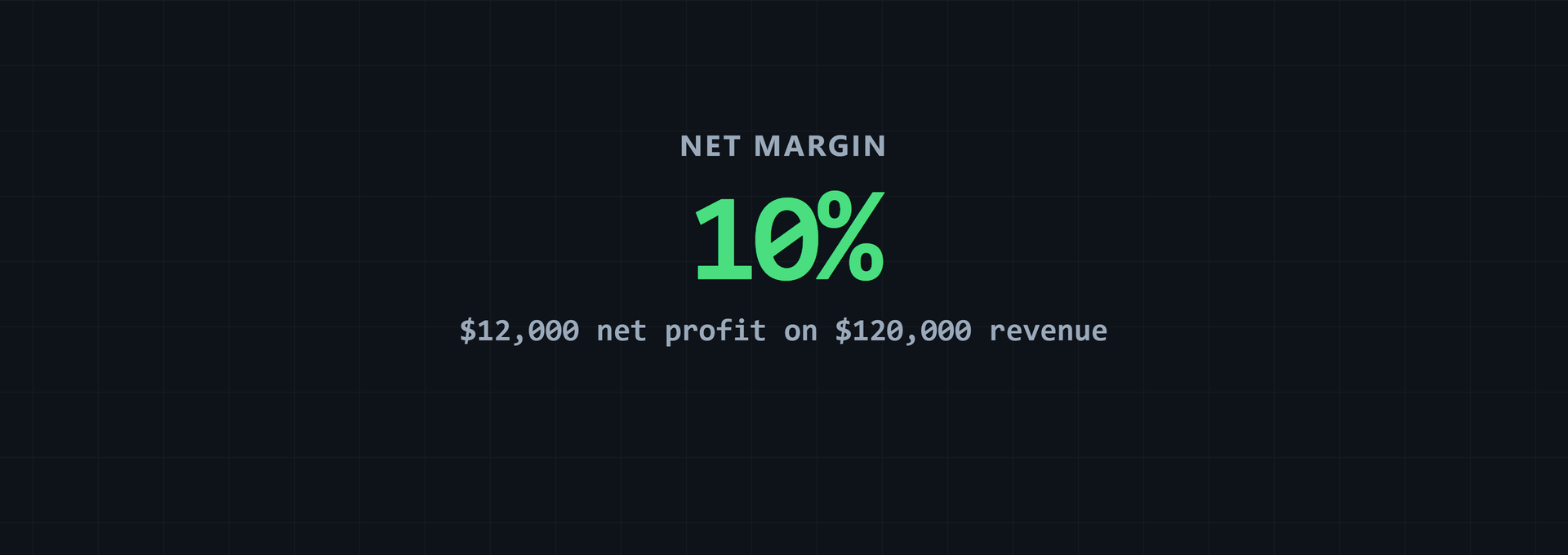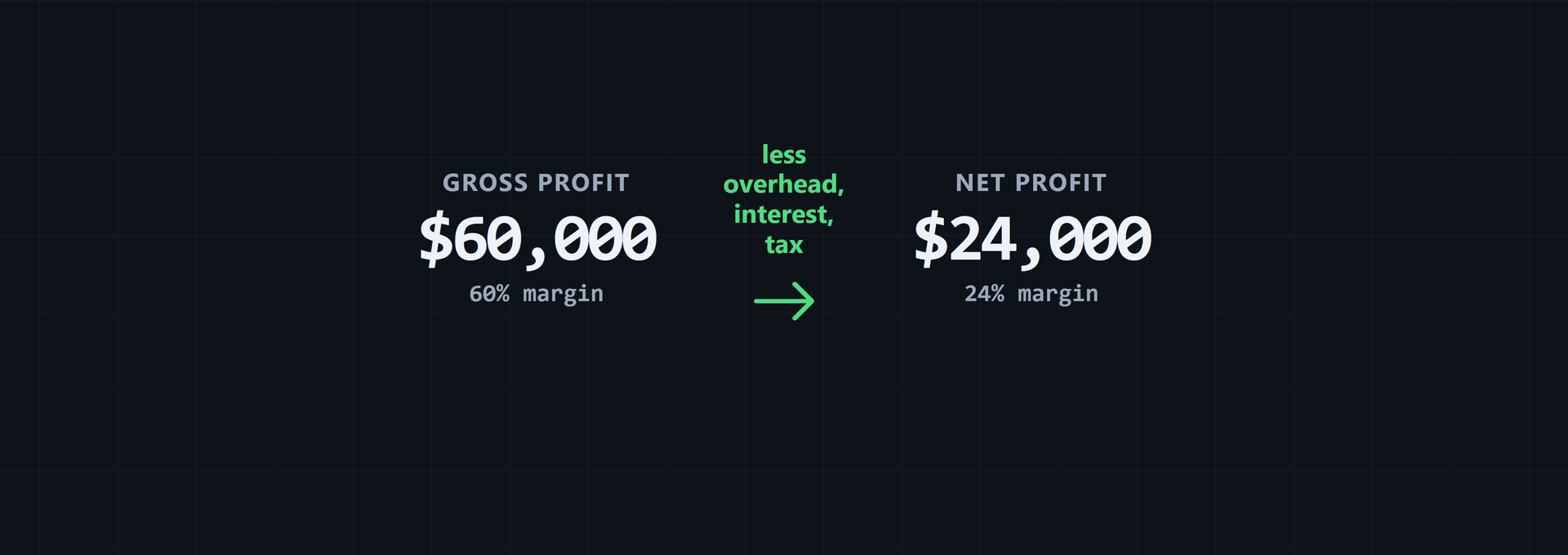
To calculate 4 types of profit, take one income statement and subtract costs in order: COGS, operating expenses, interest, and tax. The example below uses one reporting period and fixed values, so the same revenue can be followed from gross profit through to the final net profit figure.
How the four types of profit fit together
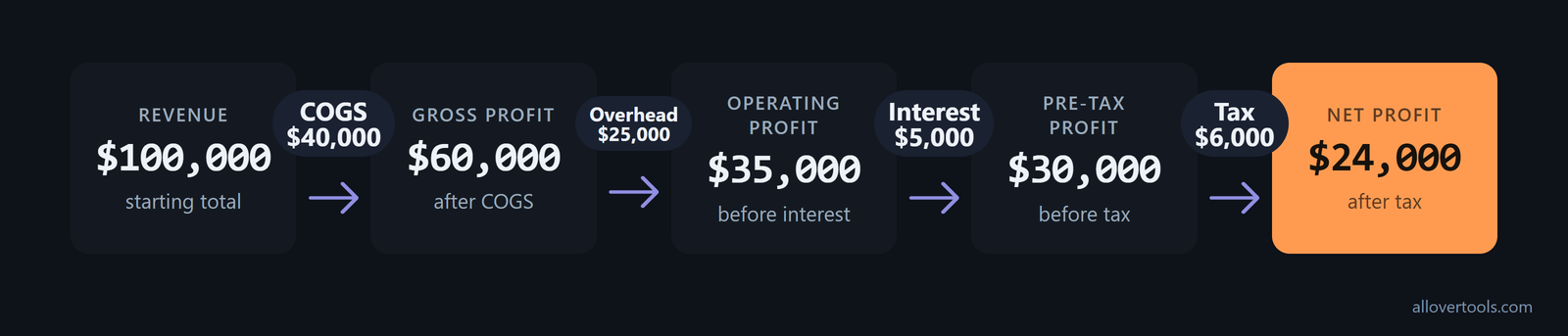
Gross profit is revenue after COGS. Operating profit is gross profit after operating expenses. Pre-tax profit is operating profit after interest, while net profit is pre-tax profit after tax. Use one reporting period and one accounting basis for every input. The Business Profit Calculator puts its main profitability options under the visible Calculation mode control.
The profit ladder from revenue to net profit
Revenue - COGS = Gross profit
Gross profit - Operating expenses = Operating profit
Operating profit - Interest expense = Pre-tax profit
Pre-tax profit - Tax expense = Net profit
Each line removes another cost and answers a more specific question. Gross profit focuses on direct selling costs. Operating profit includes overhead. The final two lines account for financing and tax. Under this formula, operating profit and pre-tax profit match only when interest expense is zero. Keep the figures as amounts first; margins are percentages of revenue.
Margins use different tax bases. Gross margin and operating margin are before tax; net margin is after tax. Stripe's margin guidance makes this distinction explicit. Use gross and operating margin when comparing business models so tax differences do not muddy the comparison. Then use net margin to see what interest and tax leave for shareholders.
What each line answers
Gross profit describes the result after costs tied directly to the product or service. Operating profit describes the core business after overhead. Pre-tax profit shows what remains after interest but before tax. Net profit is the amount left after tax. Monthly revenue paired with annual expenses will distort every line below it, even if the subtraction is correct.
How to calculate gross profit and operating profit
COGS includes costs tied directly to what was sold, such as materials, direct labor, and other direct costs. Operating expenses include rent, admin, marketing, and similar costs that are not assigned to a specific unit. The two formulas are Gross profit = Revenue - COGS and Operating profit = Gross profit - Operating expenses.
Operating profit needs a consistent classification. QuickBooks defines it as revenue minus operating expenses. Other common definitions subtract COGS and operating expenses, or begin with gross profit and subtract operating expenses. Follow the layout in the income statement, as the formula comparison shows, so you do not leave COGS out or count it twice.
COGS matters for service businesses too. Keep direct production or service costs separate from operating overhead. Billable staff time, subcontractors, and service-delivery costs belong with direct costs for a meaningful gross profit, according to Stripe's COGS explanation. Agencies, consultancies, and SaaS companies should not put every staff or delivery cost into operating expenses.
Gross profit: revenue less COGS
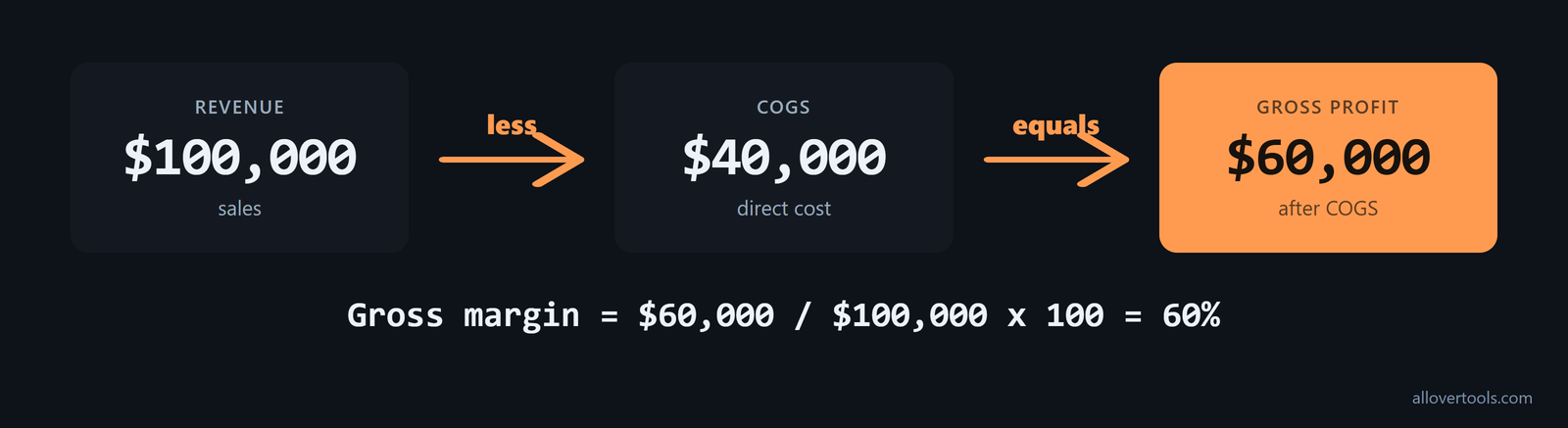
Use Revenue of $100,000 and COGS of $40,000:
Gross profit = $100,000 - $40,000 = $60,000
Gross margin = $60,000 / $100,000 x 100 = 60%
That $60,000 is before overhead, interest, and tax. The margin expresses the same result against revenue. In the Gross Margin Calculator, enter the visible Revenue and Direct cost values, keep the Period label consistent, choose Calculate, and read the result. The calculator rejects direct cost above revenue as an input rule, but accounting COGS can exceed revenue and produce negative gross profit.
Manufacturing overhead needs a classification check. With absorption costing, COGS can include raw materials, direct labor, and manufacturing overhead. General business overhead, such as office rent and admin salaries, remains in operating expenses after gross profit. This split is set out in Stripe's cost definitions. Check whether the accounting system already includes plant overhead in inventory and COGS before adding it to operating expenses again.
Operating profit: gross profit less operating expenses
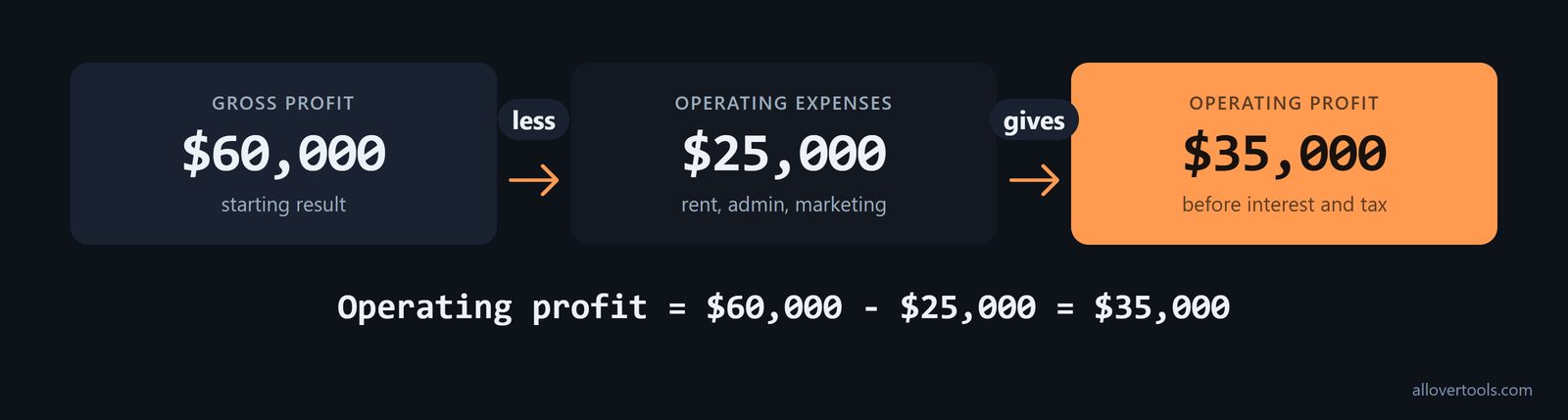
Next, assign $25,000 to rent, admin, marketing, or similar overhead:
Operating profit = $60,000 - $25,000 = $35,000Operating profit stops before interest and tax, so it isolates the result from running the business. The Business Profit Calculator's COGS & gross profit / margin mode accepts COGS of 0 or more and displays its formula and assumptions. Its Net profit margin mode accepts operating expenses or overhead, but it uses an estimated tax rate and has no interest field.
To match EBIT, include depreciation and amortization in operating profit. The formula in Investopedia's profit guide subtracts COGS, operating expenses, and depreciation and amortization. Leaving out those non-cash charges can materially change operating profit for asset-heavy businesses. For this EBIT-style subtotal, put them in operating expenses instead of ignoring them or moving them below operating profit.
How to calculate pre-tax and net profit
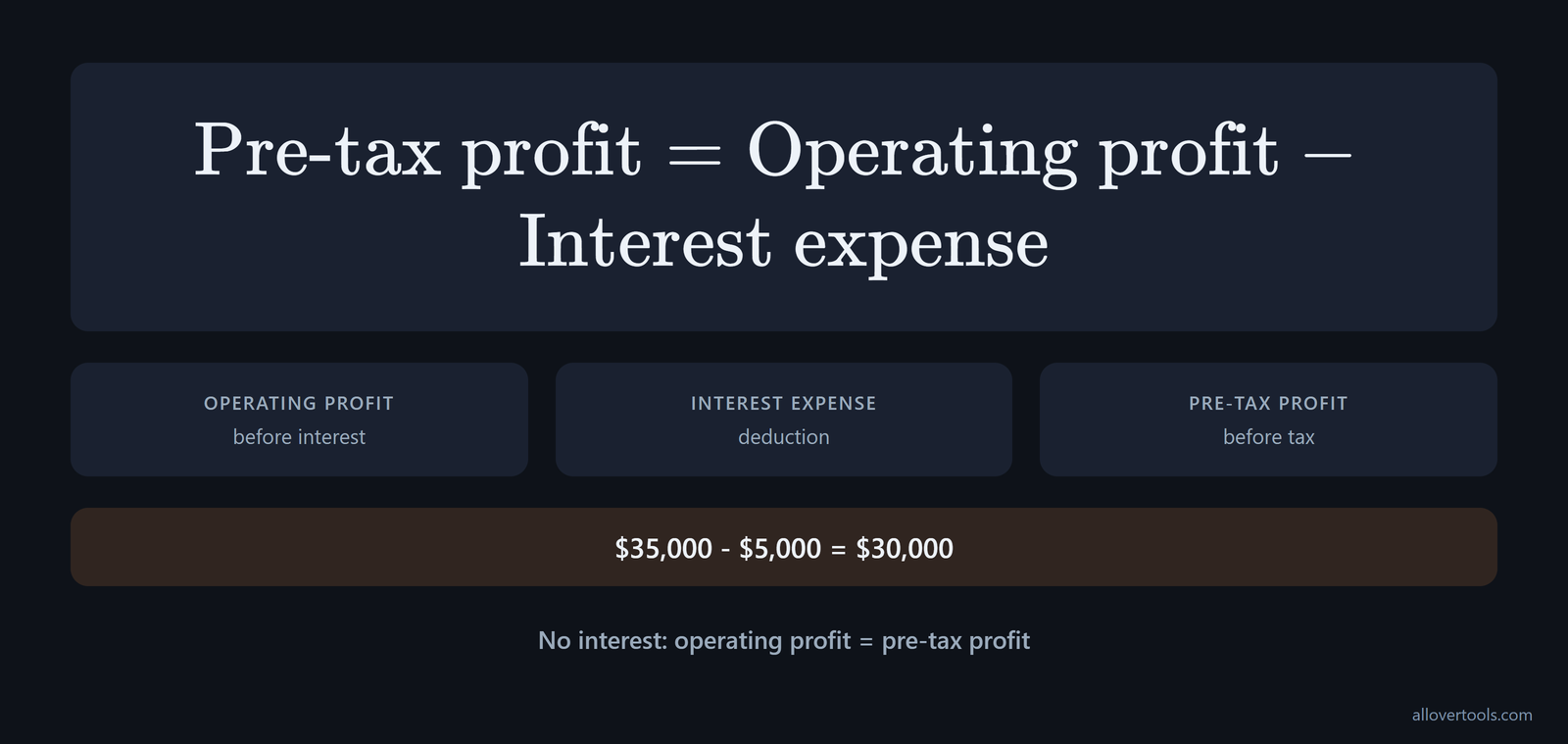
Pre-tax, or before-tax, profit is what remains after operating expenses and interest. Net profit is what remains after tax. Use Pre-tax profit = Operating profit - Interest expense and Net profit = Pre-tax profit - Tax expense.
You can check net profit without working through every subtotal: Net profit = Total revenue - (COGS + Operating expenses + Taxes + Interest). Compare this shortcut with the ladder after entering the values. As the PNC profit formula shows, an omitted or duplicated cost bucket will then stand out.
Pre-tax profit: subtract interest before tax
With interest expense of $5,000:
Pre-tax profit = $35,000 - $5,000 = $30,000If the period has no interest expense, pre-tax profit and operating profit are equal in this simplified bridge.
Pre-tax profit includes interest income as well as interest expense. The bridge is operating profit minus interest payments plus any interest earned. A business with interest-bearing assets should not subtract financing cost and ignore interest income, according to Investopedia's PBT definition.
Net profit: subtract tax from pre-tax profit
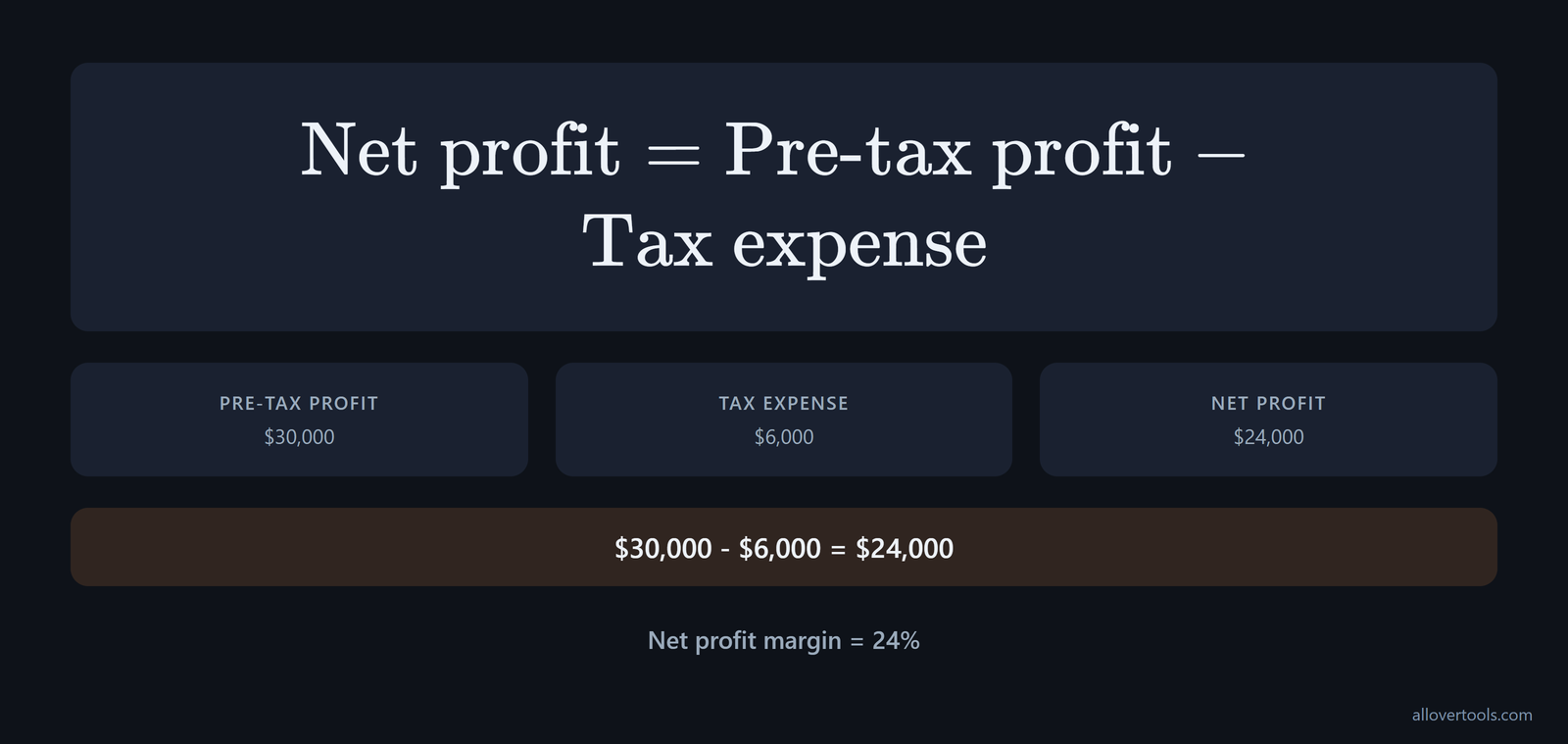
With tax expense of $6,000:
Net profit = $30,000 - $6,000 = $24,000
Net profit margin = $24,000 / $100,000 x 100 = 24%
A tax amount taken from records is not the same as the Business Profit Calculator's optional flat-rate estimate. Its visible Net profit margin mode accepts COGS, operating expenses / overhead, and Estimated tax rate % (optional). It calculates tax only when operating profit is positive and has no interest input. For the exact pre-tax bridge, use the Net Profit Margin Calculator. It has visible Operating expenses, Interest expense, and Tax expense controls and reports operating, pre-tax, net, and net-margin results. A tax-rate result is an estimate, not a tax liability.
After the listed costs and taxes, net profit is the money left for expansion, equipment, loan repayment, and the owner's draw. This practical use is set out in the FDIC profitability module. Use the bottom line to judge what is available for those business needs and owner compensation, rather than treating it as an abstract score.
Worked income statement example for all four profits
The figures below are chosen for illustration, not reported statistics. They follow one income statement from revenue through each deduction.
Map the income statement lines
| Income statement line | Amount |
|---|---|
| Revenue | $100,000 |
| COGS | $40,000 |
| Gross profit | $60,000 |
| Operating expenses | $25,000 |
| Operating profit | $35,000 |
| Interest expense | $5,000 |
| Pre-tax profit | $30,000 |
| Tax expense | $6,000 |
| Net profit | $24,000 |
Gross margin is 60%, and net profit margin is 24%. The deductions can be checked directly:
Check the result another way using total expenses: Net profit = total revenue - total expenses, including COGS, operating expenses, interest, and taxes. Xero's profit glossary gives the same formula. This route should produce the same net profit as the step-by-step calculation. If it does not, an item is probably missing or counted twice.
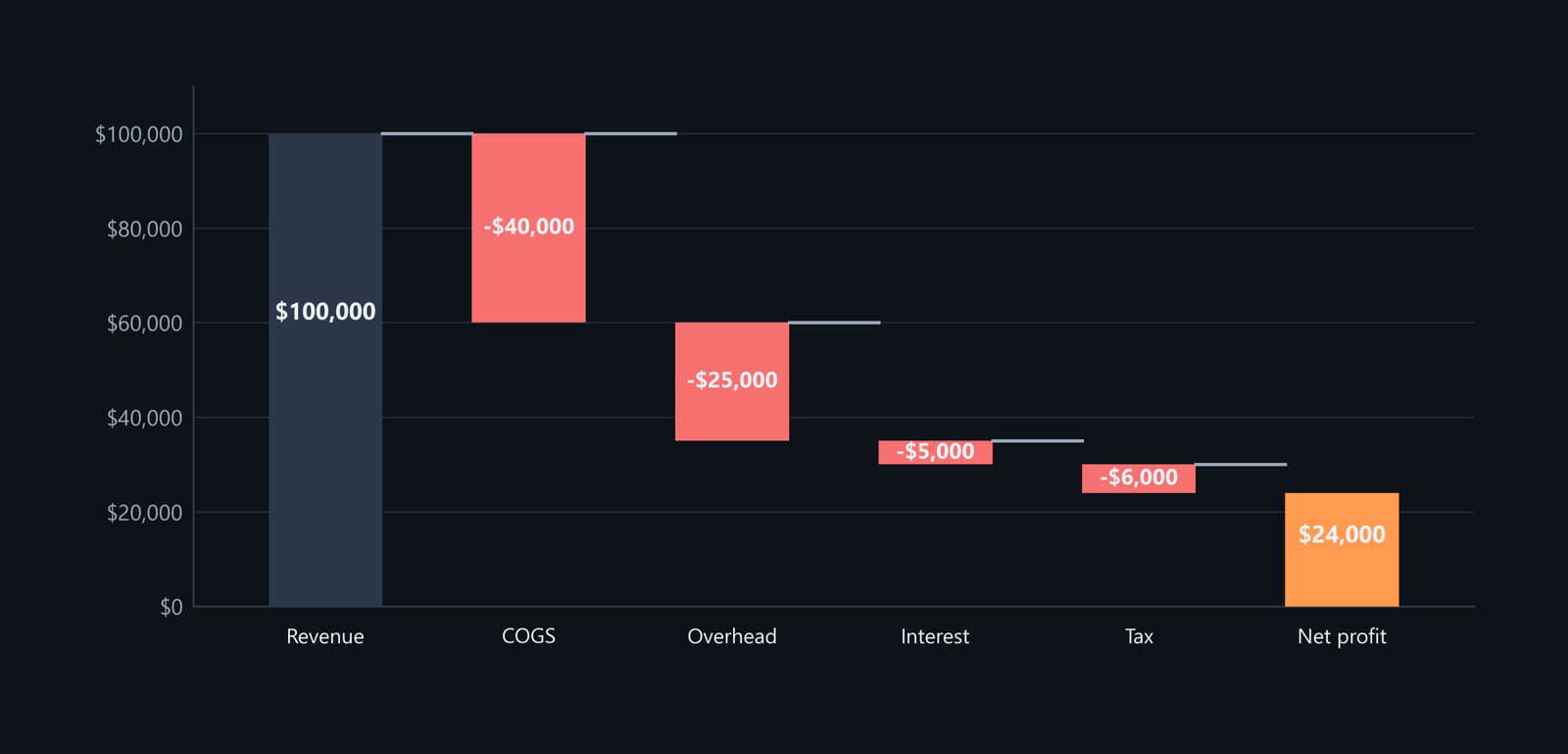
$100,000 - $40,000 = $60,000
$60,000 - $25,000 = $35,000
$35,000 - $5,000 = $30,000
$30,000 - $6,000 = $24,000
Use the calculators without mixing conventions
For the gross-profit check, choose COGS & gross profit / margin in the Business Profit Calculator. Enter Revenue and Cost of goods sold (COGS), select Calculate, and read Gross profit and Gross margin. Its separate Net profit margin mode takes Revenue, COGS, Operating expenses / overhead, and Estimated tax rate % (optional).
The Net Profit Margin Calculator uses one full Operating expenses line alongside Interest expense and Tax expense. That is different from the COGS-plus-overhead layout in the table. Use the Business Profit Calculator for the COGS and overhead example, and the Net Profit Margin Calculator for the pre-tax and net control structure. All three calculators work from values entered in the browser. They do not request live data or retrieve accounting records. Period labels the figures; it does not convert them.
Which profit type investors and lenders examine
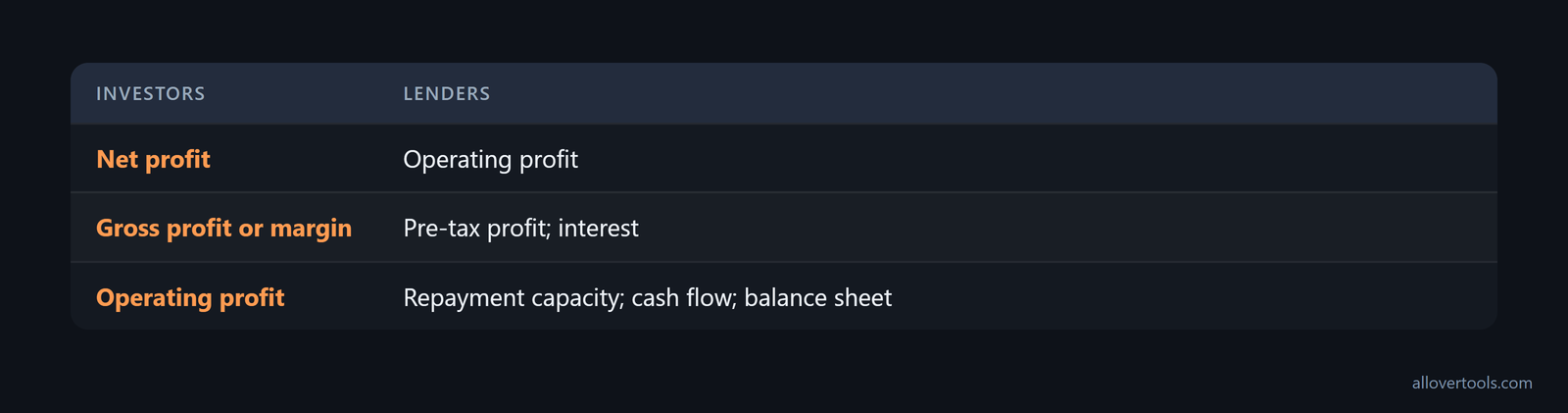
Investors often begin with net profit because it is the bottom-line result. They then check gross profit or margin and operating profit to separate direct costs, overhead, and the operating result. No single line answers every investment question.
The investor view
Net profit shows what remains after the listed deductions. Gross profit helps separate pricing and production performance from overhead. Operating profit shows the business result before financing and tax effects.
Investor materials may use different names for the same subtotals. Operating profit is also called Earnings Before Interest and Taxes (EBIT). Net profit before tax is also called earnings before tax (EBT) or pretax profit, as this profit terminology guide notes. Match those labels before comparing a report or valuation model with the income statement, or EBIT may be mistaken for the after-interest EBT figure.
The lender view
Lenders commonly examine operating and pre-tax profit alongside interest and repayment capacity. They also need cash-flow and balance-sheet information because accounting profit is not the same as cash available for debt service. The profit ladder helps locate pressure from direct costs, overhead, financing, or tax.
Diagnose profit gaps and keep the records aligned
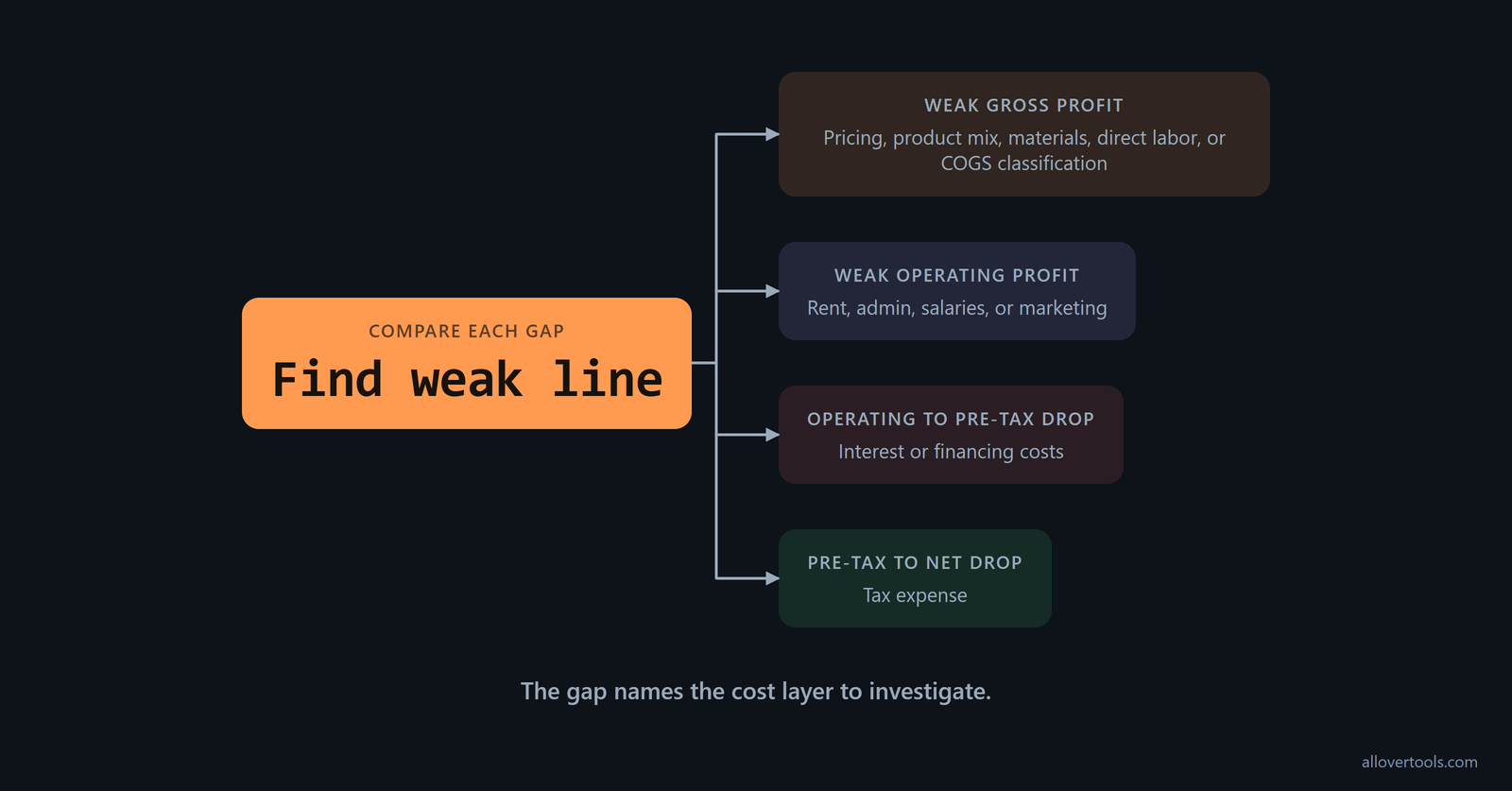
Compare one profit line with the next instead of treating a positive result as the whole picture. A calculation can be arithmetically correct while the costs are classified under the wrong line or period.
Read the gap between each profit line
- A weak gross profit points to pricing, product mix, materials, direct labor, or COGS classification.
- A healthy gross profit but weak operating profit points to overhead such as rent, admin, salaries, or marketing.
- A drop from operating to pre-tax points to interest or other explicitly recorded financing costs.
- A drop from pre-tax to net points to tax expense.
Deductions can exceed revenue, producing a negative profit. Positive gross profit alone does not establish a healthy business. Periods are comparable only when their revenue and expense cutoffs match.
Records needed for an accurate calculation
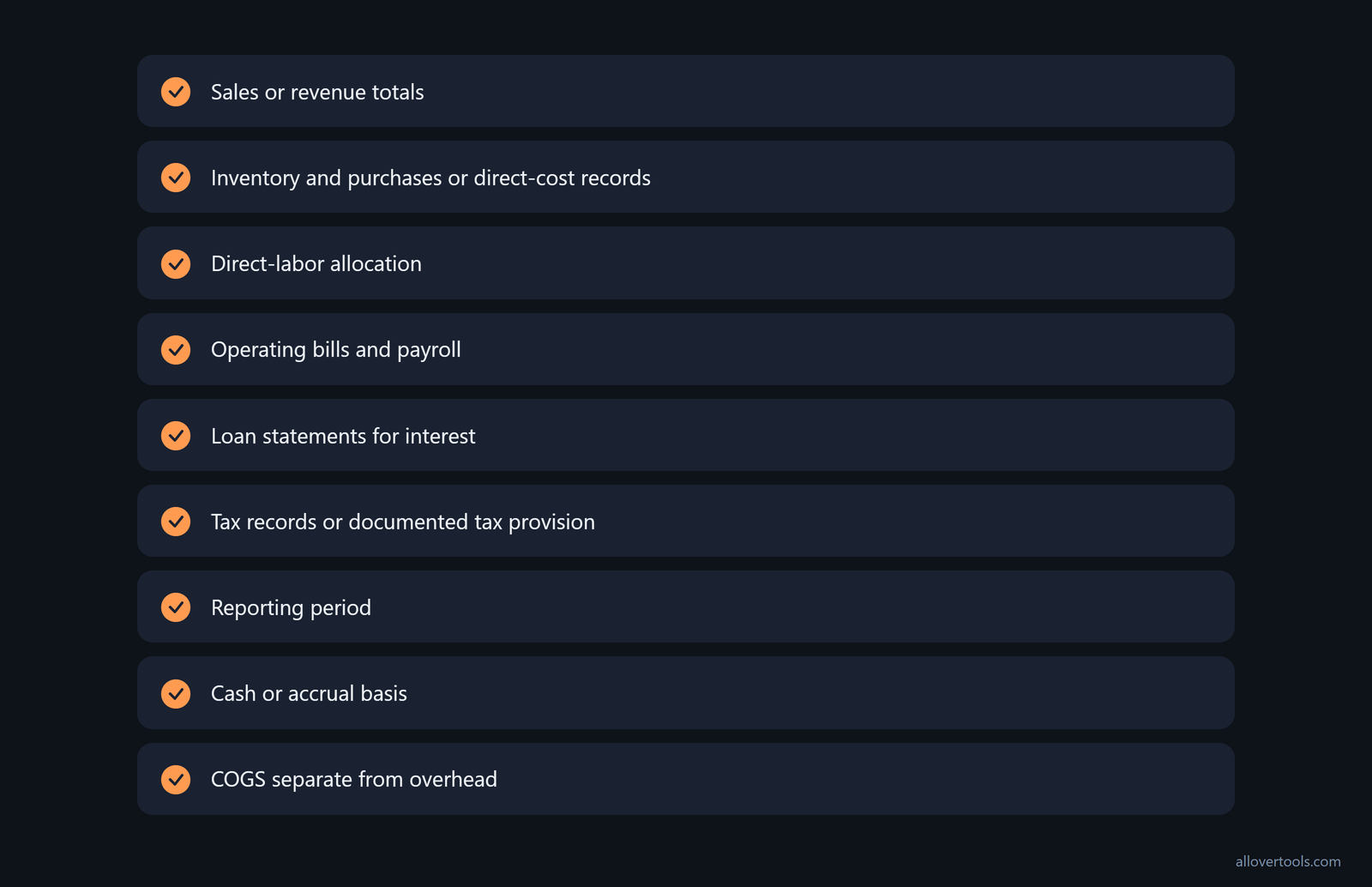
Keep sales or revenue totals, inventory and purchases or direct-cost records, direct-labor allocation, operating bills and payroll, loan statements for interest, tax records or a documented tax provision, the reporting period, and the chosen cash or accrual basis. Reconcile each calculator input to those records, and keep COGS separate from overhead. Use the Gross Margin Calculator for the direct-cost check and the Net Profit Margin Calculator for the interest and tax lines. These tools use entered figures for planning; they do not replace accounting records or tax advice.
Frequently asked questions
How do I calculate 4 types of profit?
Subtract COGS from revenue for gross profit, operating expenses from gross profit for operating profit, interest from operating profit for pre-tax profit, and tax from pre-tax profit for net profit. Keep every input on the same period and basis.
Is pre-tax profit the same as operating profit?
Not when interest expense is present. Under this formula, pre-tax profit equals operating profit minus interest expense, so they are equal only when recorded interest expense is zero.
Which profit do investors look at?
Investors often use net profit for the bottom line, then inspect gross and operating profit to understand direct costs, overhead, and the operating result. No single profit type replaces the others.
Which profit do lenders consider?
Lenders commonly examine operating and pre-tax profit alongside interest and repayment capacity. They also need cash-flow and balance-sheet information because accounting profit is not the same as cash available for debt service.
What records do I need to calculate profit accurately?
Use consistent-period revenue, COGS or direct-cost records, overhead and payroll records, loan interest statements, and tax records or a documented tax provision. Reconcile the entered amounts to those records before interpreting the result.