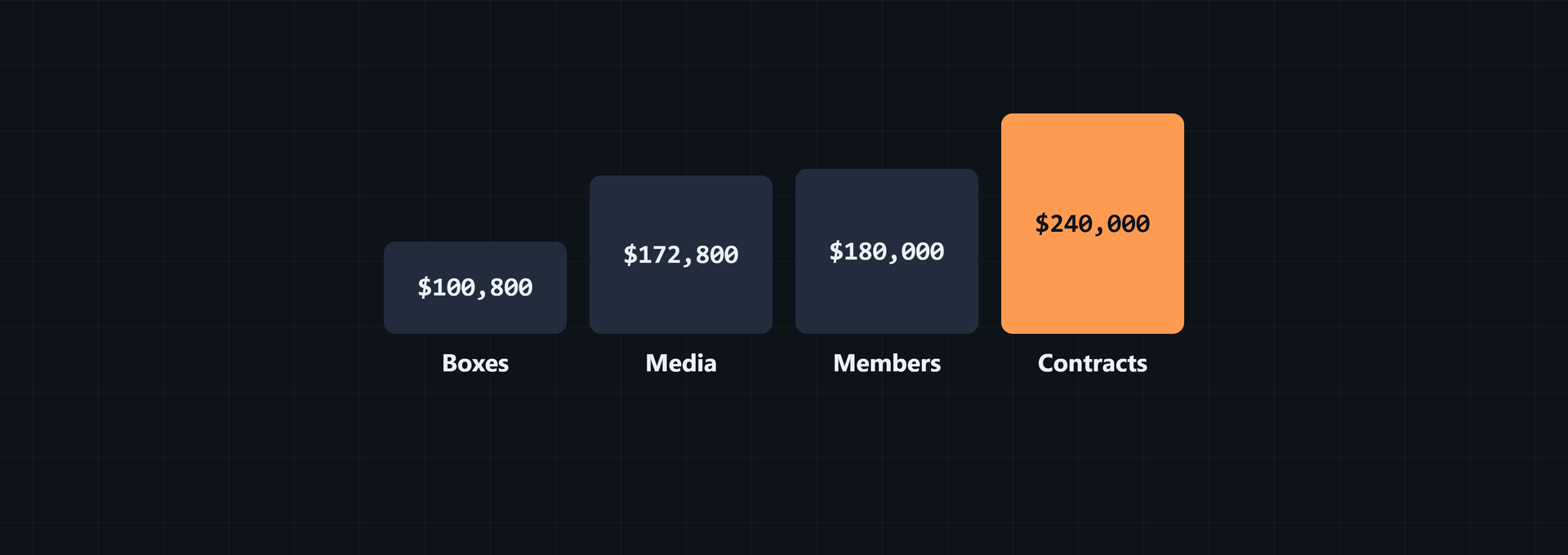
ARR for non SaaS subscriptions is the annualized run rate of repeatable subscription or contracted service revenue. The calculation works for product boxes, media access, memberships, and service agreements. Multiply the recurring charge by the number of billing periods in a year and by the number of identical subscriptions. Then use the result as a base for margin and profit checks.
How to calculate ARR for non SaaS subscriptions
ARR is the annualized run rate of a recurring revenue base. It is not total sales, cash collected, or profit. The formula is:
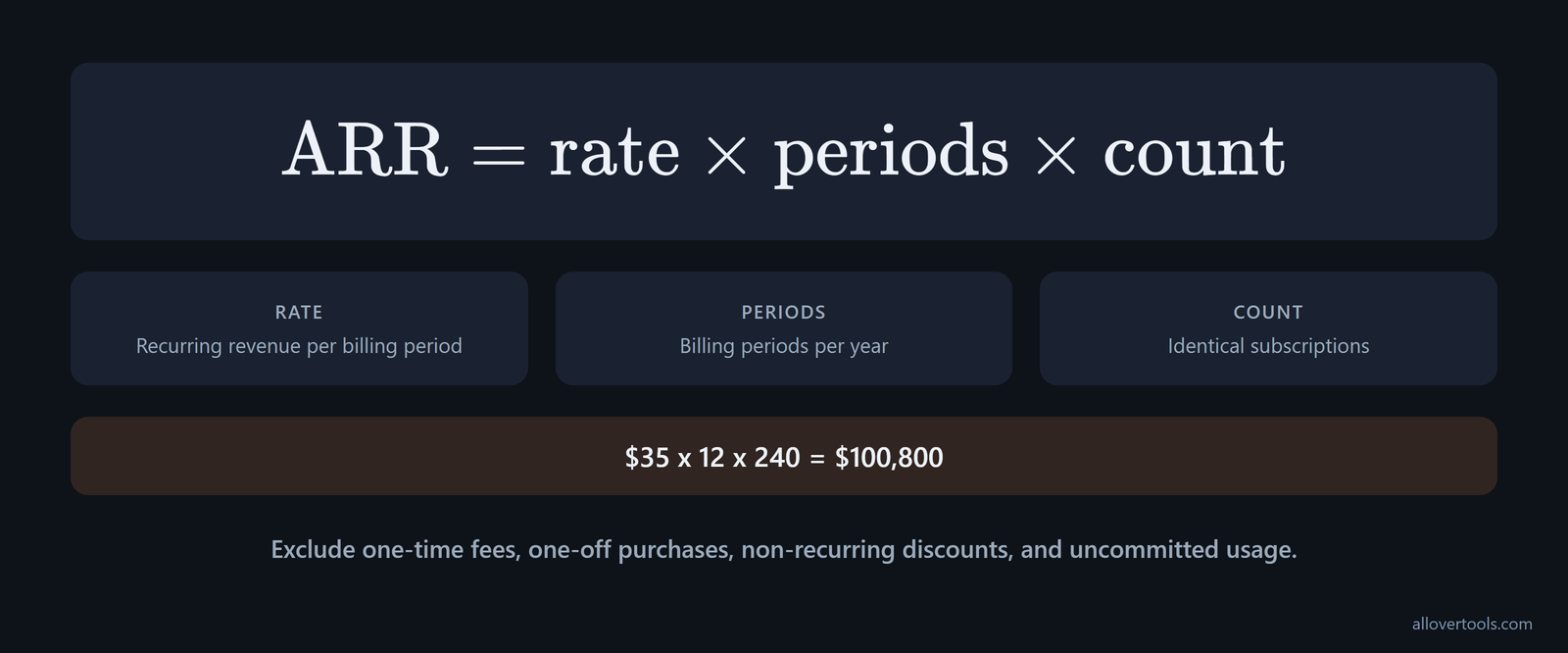
ARR = recurring revenue per billing period × billing periods per year × number of identical subscriptionsSet the third factor to 1 when the amount entered is already the total recurring revenue. Count the repeatable subscription charge or contracted service charge. Leave out one-time setup fees, one-off purchases, non-recurring discounts, and usage or overage that is not committed.
Before you count recurring revenue as ARR, check whether the customer is committed by contract. On a strict contract definition, a customer paying $10,000 for a service with no contract contributes $0 ARR, even if payments recur and the customer can cancel at any time, as the contract-based ARR rule explains. A month-to-month box, membership, or media plan should be labeled MRR or a run rate under that definition unless a signed term commits the revenue.
Some reporting definitions use ARR only for subscriptions with a term of at least one year. Under that convention, a subscription lasting less than one year is reported as MRR. Billing frequency does not change ARR when the underlying term is annual or multi-year, according to the one-year term rule. Put this convention beside the figure; otherwise a monthly consumer plan can be compared with an annual-contract SaaS benchmark under a different definition.
The currency symbol in the ARR Calculator changes the display only. The Billing period choices set the annual factor: Monthly (12 periods/year), Quarterly (4 periods/year), Semi-annual (2 periods/year), Annual (1 period/year), Weekly (52 periods/year), or Custom cycle length…. The examples below use these inputs:
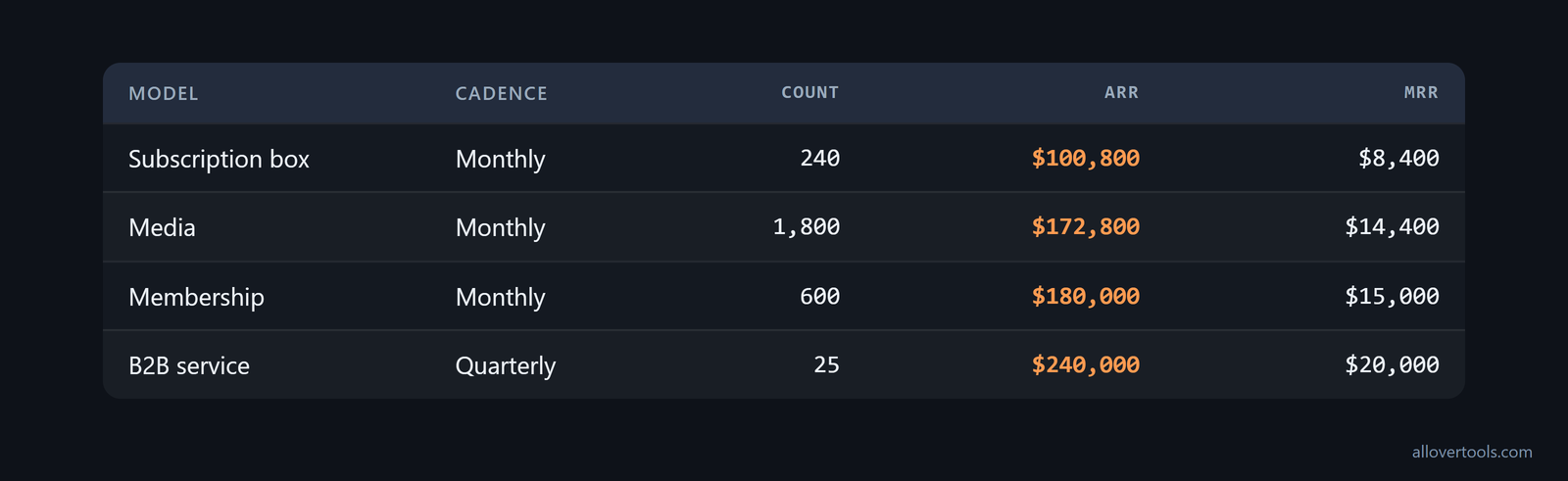
$35 monthly × 12 × 240 boxes = $100,800 ARR; $8,400 MRR
$8 monthly × 12 × 1,800 media subscriptions = $172,800 ARR; $14,400 MRR
$25 monthly × 12 × 600 members = $180,000 ARR; $15,000 MRR
$2,400 quarterly × 4 × 25 service contracts = $240,000 ARR; $20,000 MRR
The calculator uses the values entered in the page and does not fetch live revenue data. Use the ARR Calculator to run the calculation.
Normalize the recurring input before multiplying
Convert the billing cadence into periods per year before multiplying. A monthly charge uses a factor of 12, while a quarterly charge uses 4. A recurring base is different from a variable order or one-time fee because the base is expected to repeat under the plan or contract.
Enter the repeatable amount in Recurring revenue per billing period. Choose Billing period, then enter Number of identical subscriptions (optional) when the amount applies to one subscription. Leave that count at 1 when the amount is already a total.
ARR for consumer subscription products and boxes
Consumer subscription ARR can describe repeatable product orders when the charge and renewal cadence stay reasonably consistent. It does not include fulfilment cost or contribution profit. A gift order, setup fee, temporary promotion, uncommitted add-on, or shipping charge can inflate the run rate if it is added to the recurring base.
Subscription box example and forecast
For a subscription box example, enter 35 in Recurring revenue per billing period, choose Monthly (12 periods/year), enter 240 in Number of identical subscriptions (optional), and select Calculate ARR.
ARR = $35 × 12 × 240
ARR = $100,800
MRR = $100,800 ÷ 12 = $8,400
To test a different active-plan count, change 240 to 250 while keeping the $35 monthly charge unchanged:
ARR = $35 × 12 × 250
ARR = $105,000
Change = $105,000 − $100,800 = $4,200
The $105,000 result is a scenario, not a prediction. Rebuild the calculation when the price, cadence, cancellations, pauses, or included product changes. The ARR Calculator lets you change the active-plan count and recalculate the annualized result.
ARR for media, content, and membership models
Keep recurring access revenue separate from advertising, sponsorships, pay-per-view purchases, event tickets, and other irregular content revenue. Separate ARR lines also help when plans have different prices, billing cadences, or renewal risks. Non-recurring revenue should stay outside the recurring base.
Media subscription example
For the media example, enter an $8 monthly recurring charge and 1,800 identical subscriptions:
ARR = $8 × 12 × 1,800
ARR = $172,800
MRR = $172,800 ÷ 12 = $14,400
Advertising and one-off content sales remain separate revenue lines. They do not enter this ARR calculation unless they are fixed recurring commitments under the plan. The ARR Calculator shows the annual factor and the MRR equivalent for the entered subscription base.
Media publishers sometimes use ARR as a projection of annual run rate, not as a measure of signed annual contracts. With that convention, ARR = MRR × 12, projecting a full year from current monthly performance. Some call this Annual Run Rate, as the publisher metric guide describes. Keep the label separate from contract-based ARR when most subscribers are month-to-month.
Membership growth and churn example
Start with a $25 monthly fee and a snapshot of 600 active members:
ARR = $25 × 12 × 600 = $180,000
MRR = $180,000 ÷ 12 = $15,000
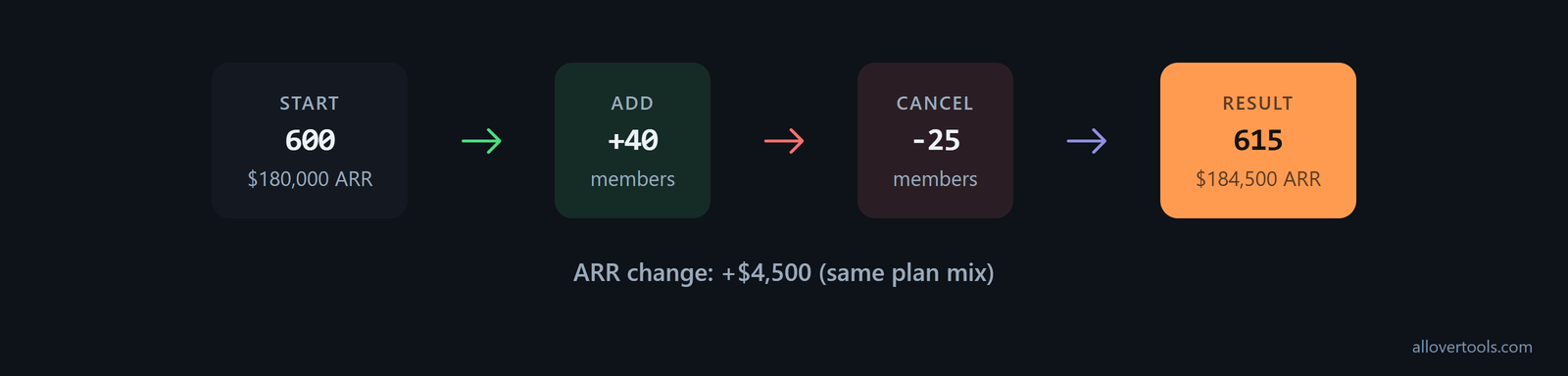
Between snapshots, 40 additions minus 25 cancellations leaves 615 active members. Recalculate with the same price and plan mix:
New ARR = $25 × 12 × 615 = $184,500
Change = $184,500 − $180,000 = $4,500
This count-only movement assumes the price and plan mix stay the same. Downgrades, upgrades, pauses, and failed renewals need separate recurring-revenue adjustments.
Describe a membership ARR change as a bridge, not only as a change in member count. One complete structure is ARR = Sum of Annual Subscription Revenue + Expansion Revenue − Contraction ARR − Churned ARR: upgrades or higher-priced plans increase it, while downgrades or discounts and lost subscriptions reduce it, as the ARR movement formula shows. Use those categories when the $4,500 increase includes plan changes. The count-only example cannot show how much came from volume, price, or churn.
ARR for B2B service contracts
For a maintenance, support, inspection, or managed-service agreement, identify the committed recurring charge and its billing cadence. Keep implementation work, project change orders, reimbursed expenses, and usage above the committed amount outside the recurring contract base.
Normalize a contract by its billing cycle
The service-contract example uses $2,400 per quarter and 25 identical contracts:
ARR = $2,400 × 4 × 25
ARR = $240,000
MRR = $240,000 ÷ 12 = $20,000
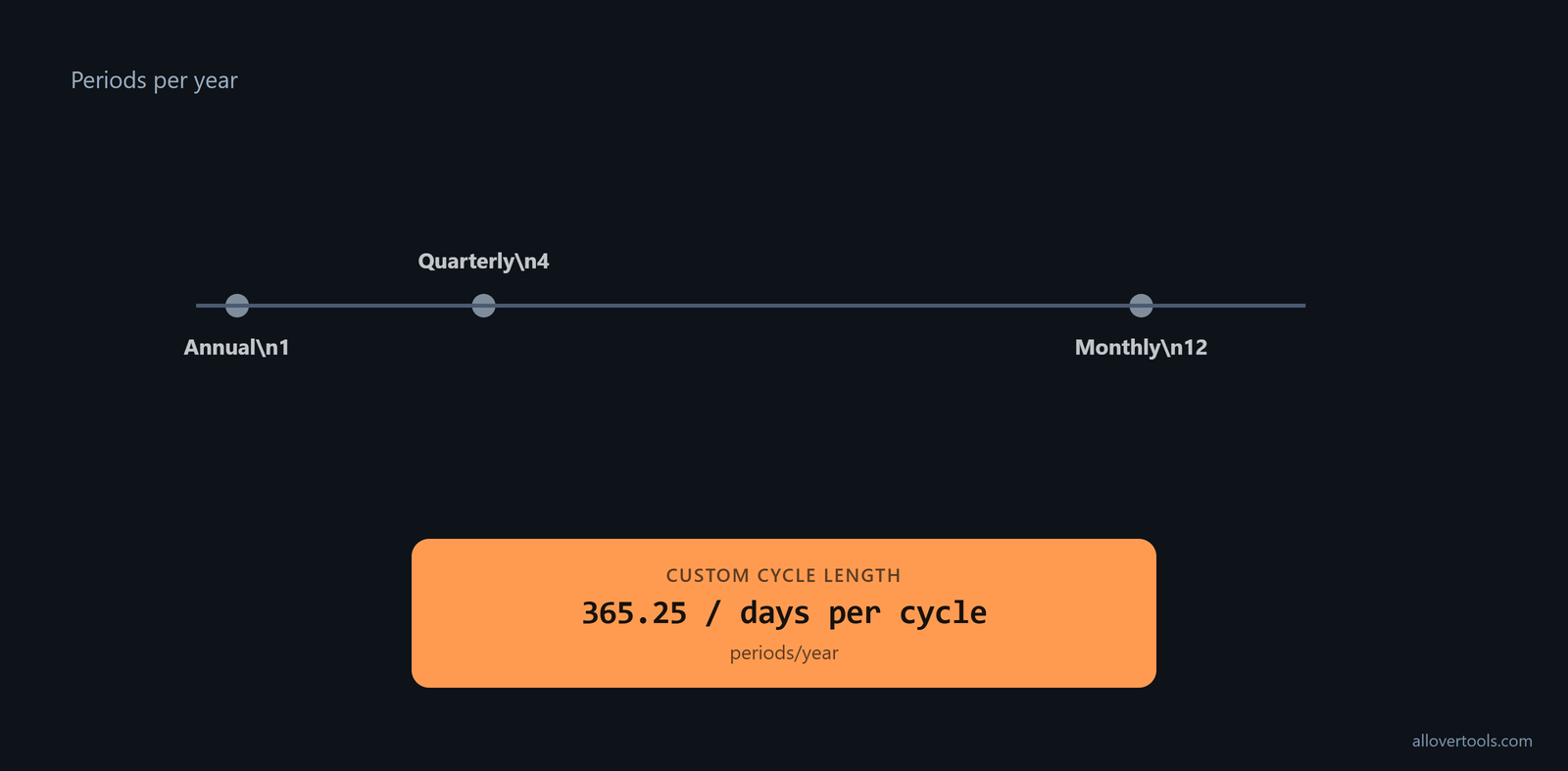
An annual contract maps to Annual (1 period/year). A monthly retainer maps to Monthly (12 periods/year). An unusual cadence maps to Custom cycle length… with a whole number of days. The calculator uses 365.25 ÷ days per cycle for that annual factor.
Annualizing a signed term does not prove renewal. It also does not turn variable work into recurring revenue. Include variable work only when the contract fixes that charge.
Bring a payment plan longer than one year back to the next 12 months before entering it. A three-year service contract paid in equal instalments contributes one year of revenue to ARR, not its full contract value, as the 12-month ARR guidance explains. This keeps a long maintenance agreement or membership comparable to a one-year contract and stops the payment schedule from inflating the metric.
Separate a usage-heavy service into committed revenue and recent consumption:
- Contracted minimums, fixed recurring fees, and committed spend tiers count toward ARR.
- Keep average monthly usage of $18,000 beside a separate $216,000 usage run rate, calculated as $18,000 × 12, as the usage reporting guidance shows.
- Keep overages above the commitments out of ARR.
Use only the committed base in the ARR Calculator.
How non SaaS ARR differs from SaaS ARR
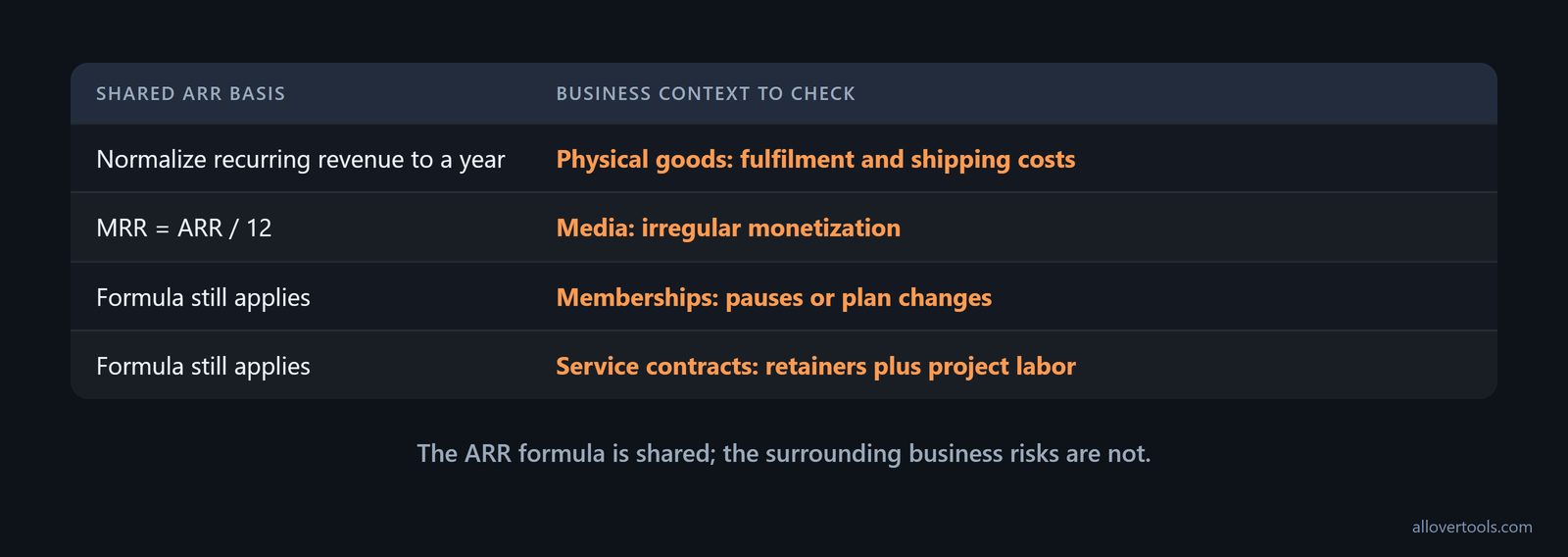
The formula does not change: normalize recurring revenue to a year, then show MRR as ARR ÷ 12. The surrounding business does change. Physical goods bring fulfilment and shipping costs, media can include irregular monetization, memberships can pause or change plans, and service contracts can combine retainers with project labor.
What the shared formula does not measure
ARR is a run-rate indicator. It is not recognized revenue, cash flow, margin, profit, renewal certainty, or customer lifetime value. Apply the same test to every model: would this amount recur under the stated plan or contract? Keep separate ARR lines when price, cadence, or risk differs.
Combine ARR with margin and profit analysis
Use the same annual basis when moving from recurring revenue to a profitability check. The box example starts with $100,800 ARR. The calculations below use chosen scenario values, not a forecast or accounting recognition.
From ARR to gross margin
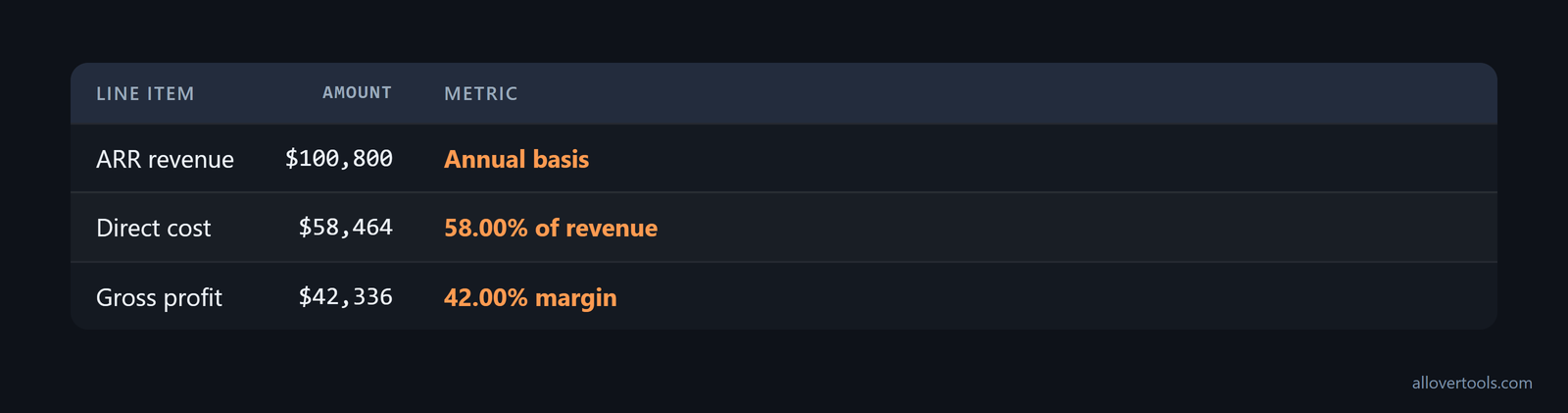
Enter Revenue of $100,800 and Direct cost of $58,464 in the Gross Margin Calculator. The results are:
Gross profit = $100,800 − $58,464 = $42,336
Gross margin = $42,336 ÷ $100,800 × 100 = 42.00%
Direct cost share = $58,464 ÷ $100,800 × 100 = 58.00%
ARR supplies the recurring-revenue basis. The margin calculation shows how direct cost relates to that revenue. Keep both amounts on the same period and scope.
From ARR to net profit
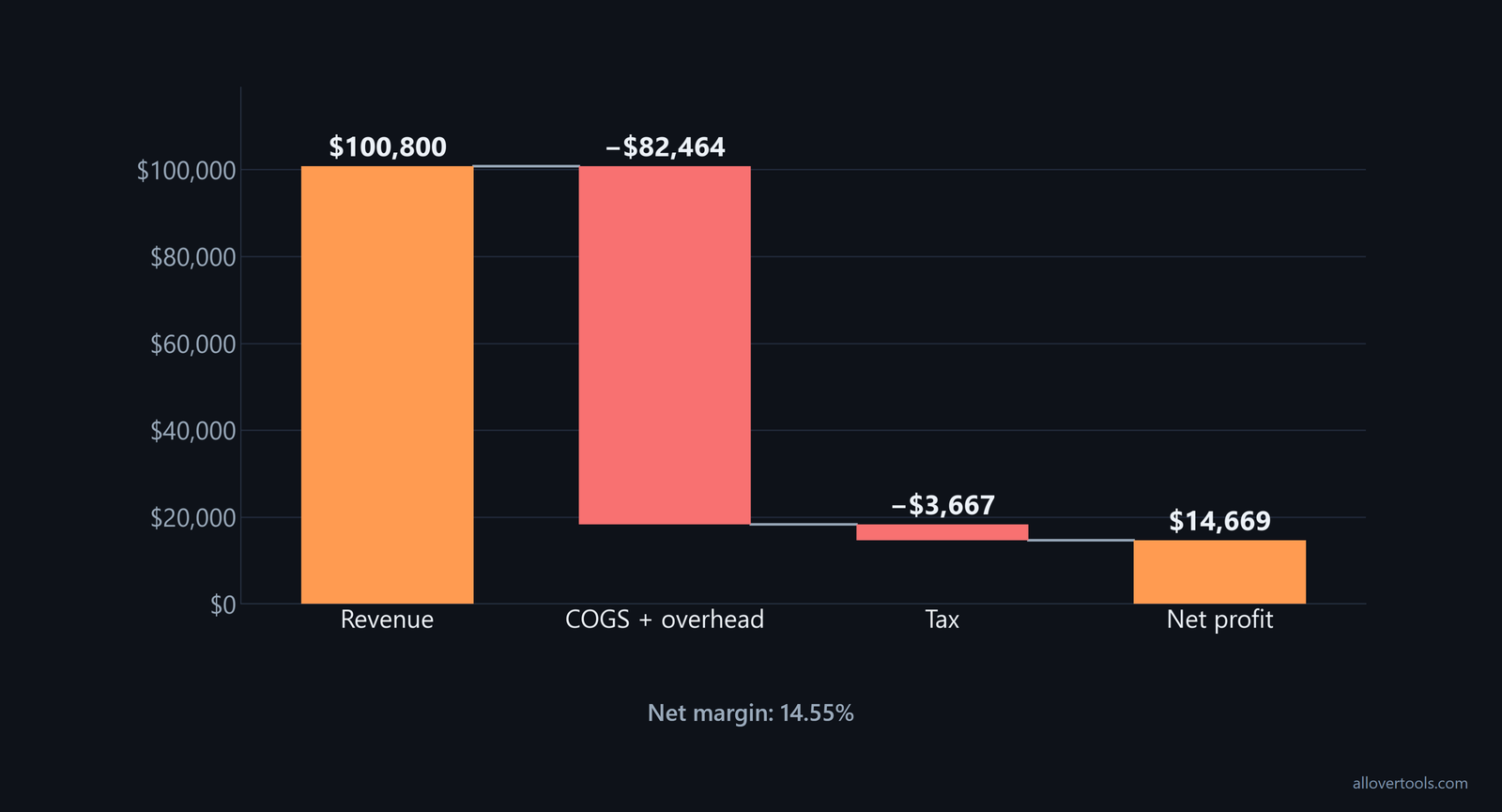
Set Calculation mode to Net profit margin in the Business Profit Calculator. Enter Revenue $100,800, Cost of goods sold (COGS) $58,464, Operating expenses / overhead $24,000, and Estimated tax rate % (optional) 20.
Gross profit = $100,800 − $58,464 = $42,336
Operating profit = $42,336 − $24,000 = $18,336
Estimated tax amount = $18,336 × 20% = $3,667.20
Net profit = $18,336 − $3,667.20 = $14,668.80
Net margin = $14,668.80 ÷ $100,800 × 100 = 14.55%
When Revenue, Operating expenses, Interest expense, and Tax expense are separate inputs, the Net Profit Margin Calculator matches that structure. Keep revenue and costs on the same period in every check. These results use the chosen scenario values and are not a forecast.
When ARR is misleading for seasonal or usage-heavy models
An ARR snapshot can overstate a full-year run rate for a seasonal box or membership when cancellations or pauses cluster in part of the year. Show the snapshot beside renewal or churn movements and seasonal cash timing.
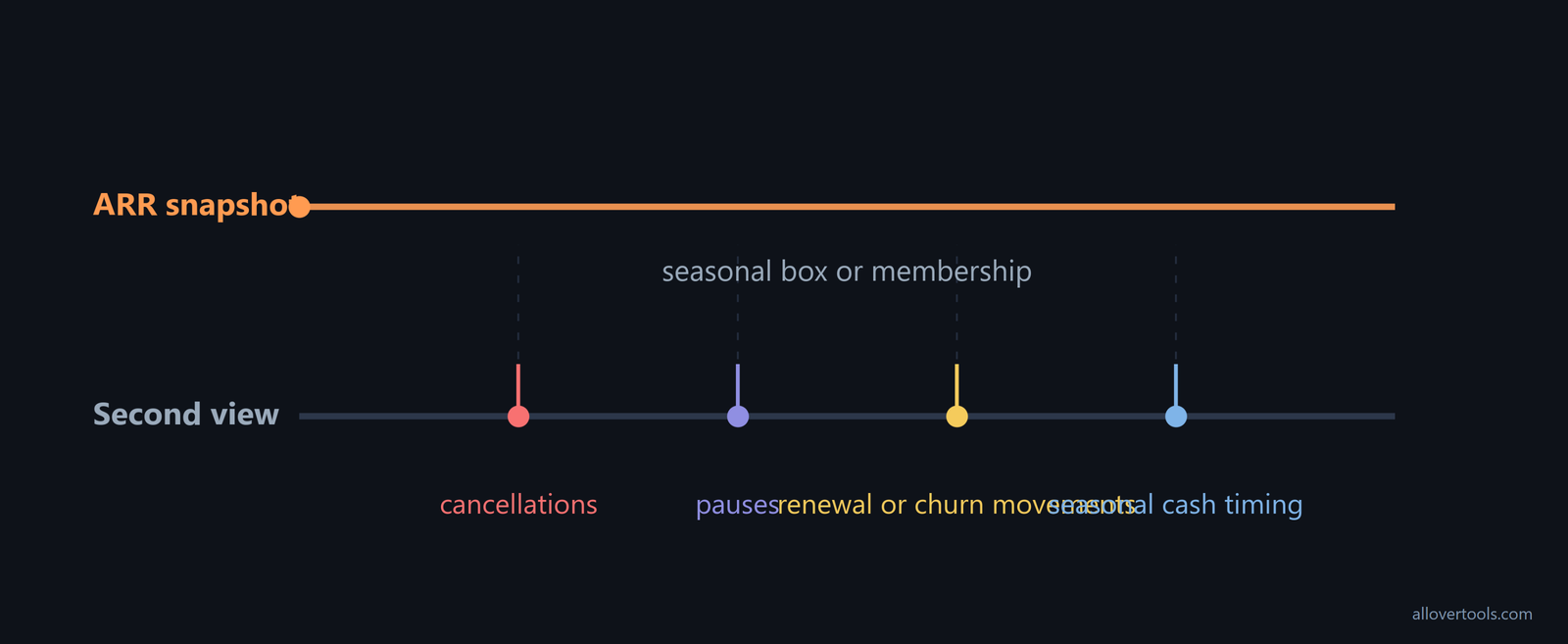
Seasonality and usage need a second view
A media or API-like usage model may have a recurring access fee but volatile usage revenue. Report access ARR and usage revenue separately. A service contract with a small committed base and substantial variable work can keep ARR stable while workload and margin change sharply, so show cost-to-serve beside the recurring base.
If usage has no contractual floor, report recurring usage revenue as recognised revenue or a run rate, not ARR. Pure pay-per-use or pay-per-result work can have ARR of 0 € even while it produces revenue, because the no-floor rule counts no guaranteed minimum. That is the correct treatment for a cancellable service priced only per unit delivered.
Not every usage fee belongs outside ARR. Recurring usage-based fees can enter ARR when they are predictable; recurring service fees can enter when they are tied to an ongoing customer relationship. Highly unpredictable usage stays outside. Make the same judgment each period and disclose it, using the predictable-usage definition as the boundary for metered add-ons, per-visit charges, or recurring overages.
For a pure consumption model with no single contracted figure, use a trailing three-month average and multiply it by 12. That produces a steadier current run rate for metered APIs, pay-per-use logistics, or pay-per-view media. It is a run rate, not contracted ARR, as the trailing-average method sets out.
One month multiplied by 12 is not automatically contracted ARR. That equality holds only when contract mix, usage, and customer count are stable; ramped multi-year deals, mid-month starts and churn, seasonal usage, and foreign-exchange translation can make annualized MRR diverge from ARR, according to the ARR-versus-MRR analysis. Check those conditions before treating the calculator's annualized result as a full-year comparison.
Do not add volatile amounts to ARR unless they are fixed recurring commitments. Use ARR for the repeatable base, then use margin and profit measures to test whether that base supports the business.
Frequently asked questions
How do I calculate ARR for non SaaS subscriptions?
Multiply the recurring charge for one billing period by the number of billing periods per year and the number of identical subscriptions. Exclude one-time fees and uncommitted usage, then use the ARR Calculator to show ARR and ARR ÷ 12 as MRR.
Can ARR be used for subscription box businesses?
Yes, when the input is the repeatable subscription charge and cadence rather than one-off orders or variable add-ons. Keep product, fulfilment, and shipping costs separate so ARR is not mistaken for profit.
How do I calculate ARR for media and membership models?
Annualize the recurring access or membership charge using its billing cadence and active plan count. Keep advertising, sponsorships, events, pay-per-view sales, and other irregular revenue outside the ARR base.
How do I normalize a B2B service contract to ARR?
Use only the committed recurring retainer or service charge. Multiply it by the contract's billing periods per year, then by the number of identical contracts when the input is per contract. Treat implementation, project work, reimbursements, and uncommitted usage separately.
Is ARR reliable for seasonal or usage-based subscriptions?
The repeatable base is useful, but the annualized figure can mislead when cancellations, pauses, seasonality, or usage charges change materially through the year. Pair it with churn or renewal movements, cash timing, margin, and profit measures.